

This is Part 2 of my 3-part series on plant-based hair colour longevity. In Part 1, I explained why henna is fundamentally different from conventional hair colour and how the stain permanently bonds to the hair fibre. In this part, I want to introduce indigo — the other powerhouse in plant-based hair dyeing, and explore why 1-step colour behaves differently from a 2-step process.
What is Indigo?
Before we get into the 1-step versus 2-step debate, let's understand indigo itself. I call it the 'diva' of plant dyes — and for good reason.

Indigofera tinctoria — the botanical source of natural indigo, used for centuries in fabric dyeing and plant-based hair colour.
Indigo is one of the oldest botanical dyes known to humanity, used for centuries across cultures to stain fabric in rich, deep blues. From the vibrant swirls of tie-dye and traditional batik prints to the refined Japanese art of shibori — this plant dye has left its indelible mark on textile traditions around the world.
In fact, the iconic blue of denim jeans owes its colour entirely to indigo — making it one of the most widely recognised applications of this ancient dye in modern everyday life.

The iconic blue of denim — one of the most recognisable applications of natural indigo dye.
The indigo dye molecule is known as indigotin and comes from the leaves of Indigofera tinctoria, a plant cultivated for centuries for its extraordinary blue pigment. Traditionally, indigo is used to dye fabric through a vat process, where the leaves are fully fermented to develop the blue dye. Indigo is chemically reduced to a soluble form, the fabric is dipped, then air-oxidised — often with mordants to fix the colour.
 Pic above: Traditional indigo vat dyeing — fabric is dipped into a reduced indigo solution and air-oxidised to develop the iconic blue colour.
Indigo for Hair Dyeing
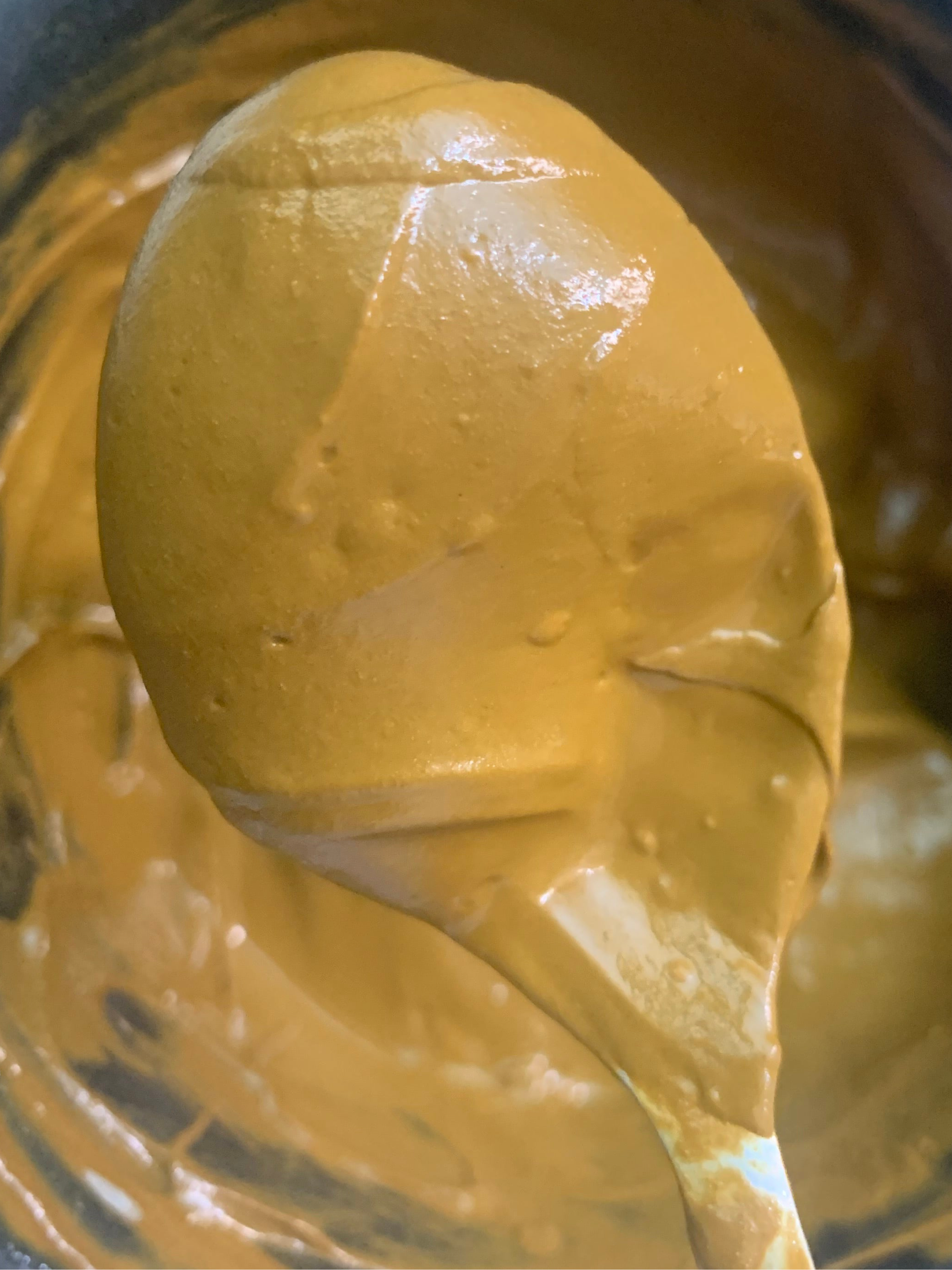
Hair dyeing with indigo does not require a vat and instead use the plant leaves directly. The indigo leaves naturally ferment in the presence of moisture creating the precursor dye molecules in its leaves. They are then dried and powdered fine. As the leaf powder is mixed with water, the precursor dye molecule of indigo instantly releases into the paste, ready to migrate to the hair and oxidise.

Dried indigo leaves are powdered and mixed with water to apply on henna treated hair.
Once applied to the hair, the precursor dye molecule migrates through the cuticles into the hair fibre and oxidises inside the hair shaft. The final oxidised molecule is the blue pigment indigotin. The blue pigment is a large molecule dye and gets mechanically trapped and lodged within the pockets created by henna dye. That is where the magic of plant-based hair colour begins.

Freshly prepared indigo leaf powder paste — once applied on hair, the precursor dye molecule migrates into the hair shaft and oxidises to form the blue pigment indigotin.
The 'Diva' of plant dyes
But here is the catch! Indigo is a highly temperamental plant leaf dye that needs 'near-perfect' conditions to work on hair, unlike henna which is relatively easy-going. For indigo to migrate and bind effectively, the hair cuticle needs to be sufficiently open. Resistant, low-porosity or tightly packed cuticles can significantly impede dye uptake. Precisely why you may notice poor grey coverage on sideburns and temples which are usually resistant type hair with tightly packed cuticles.
The environment also matters: indigo performs best in a slightly alkaline pH and benefits from warmth during application, both of which help the cuticle open and allow the precursor molecule to migrate and penetrate the shaft.
And lastly, the most critical issue when using indigo on hair is 'timing'. The precursor releases the moment indigo powder is mixed with water — and the clock starts ticking immediately. If the paste sits too long before application or is applied too slowly, the precursor begins oxidising outside the hair shaft. Once oxidised externally, the indigotin molecule is too large to migrate into the fibre and simply washes out with the next shampoo.

Cross-section of a hair shaft — orange lawsone (henna) bonds to keratin; blue indigotin (indigo) locks inside the fibre, together creating plant-based brown.
Orange + Blue = Brown: The Colour Chemistry of Henna & Indigo Explained
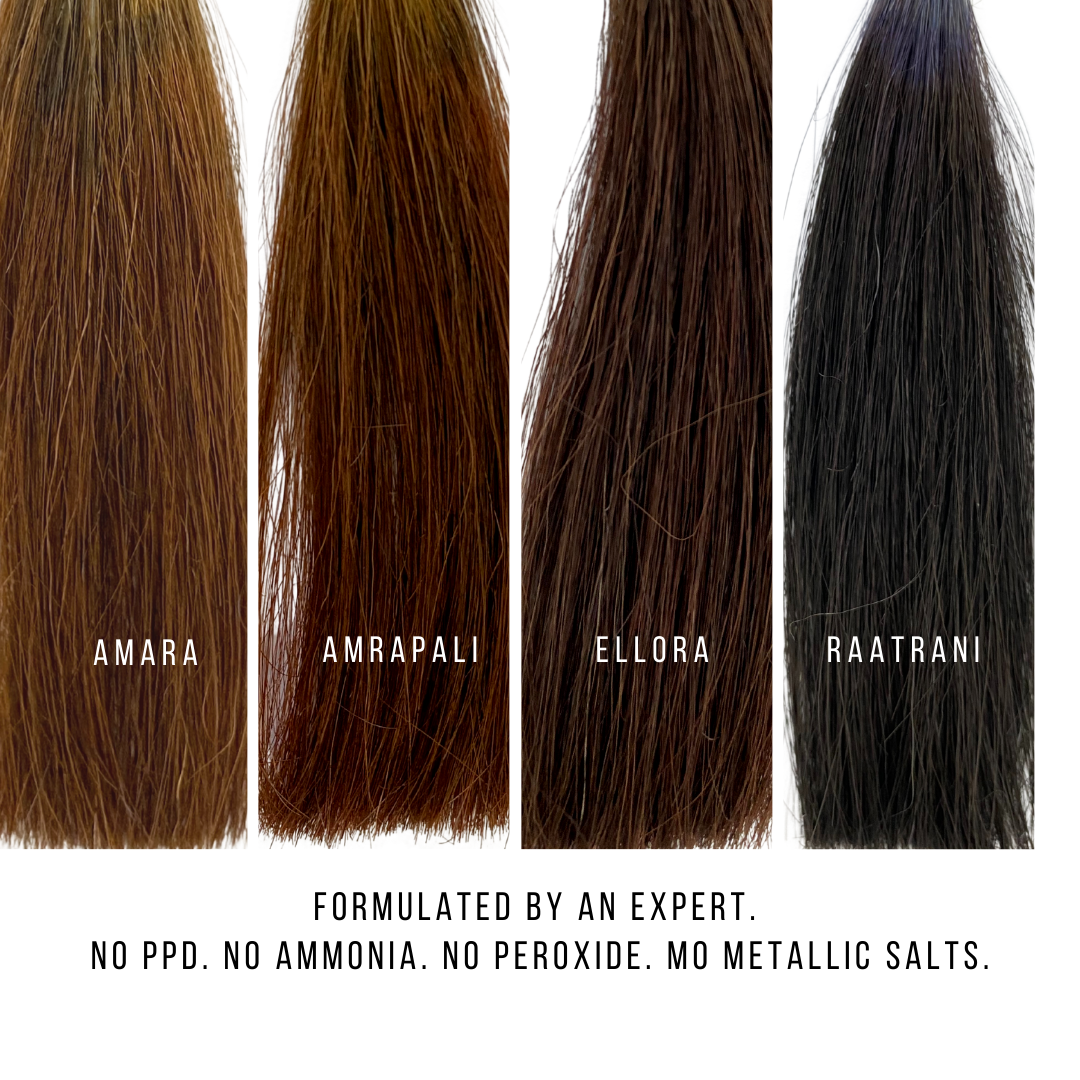
Ever wondered how henna and indigo create a natural brown hair colour? It all happens inside your hair shaft. Henna's lawsone bonds to the keratin fibre and lays down a warm orange stain, while the blue indigotin settles into the pockets henna has opened in the fibre. Orange plus blue reflect brown, and the depth of shade depends on how much pigment each fibre takes in: a lighter uptake shows as lighter colour, while a stronger pigment uptake yields deep brown to black shade as illustrated below.
This is also one of the key reasons why plant based hair dyes can look different from person to person.
Shown in pictures below how pigment concentration determines the depth of shade.


The 1-Pot Challenge: When Henna & Indigo Compete
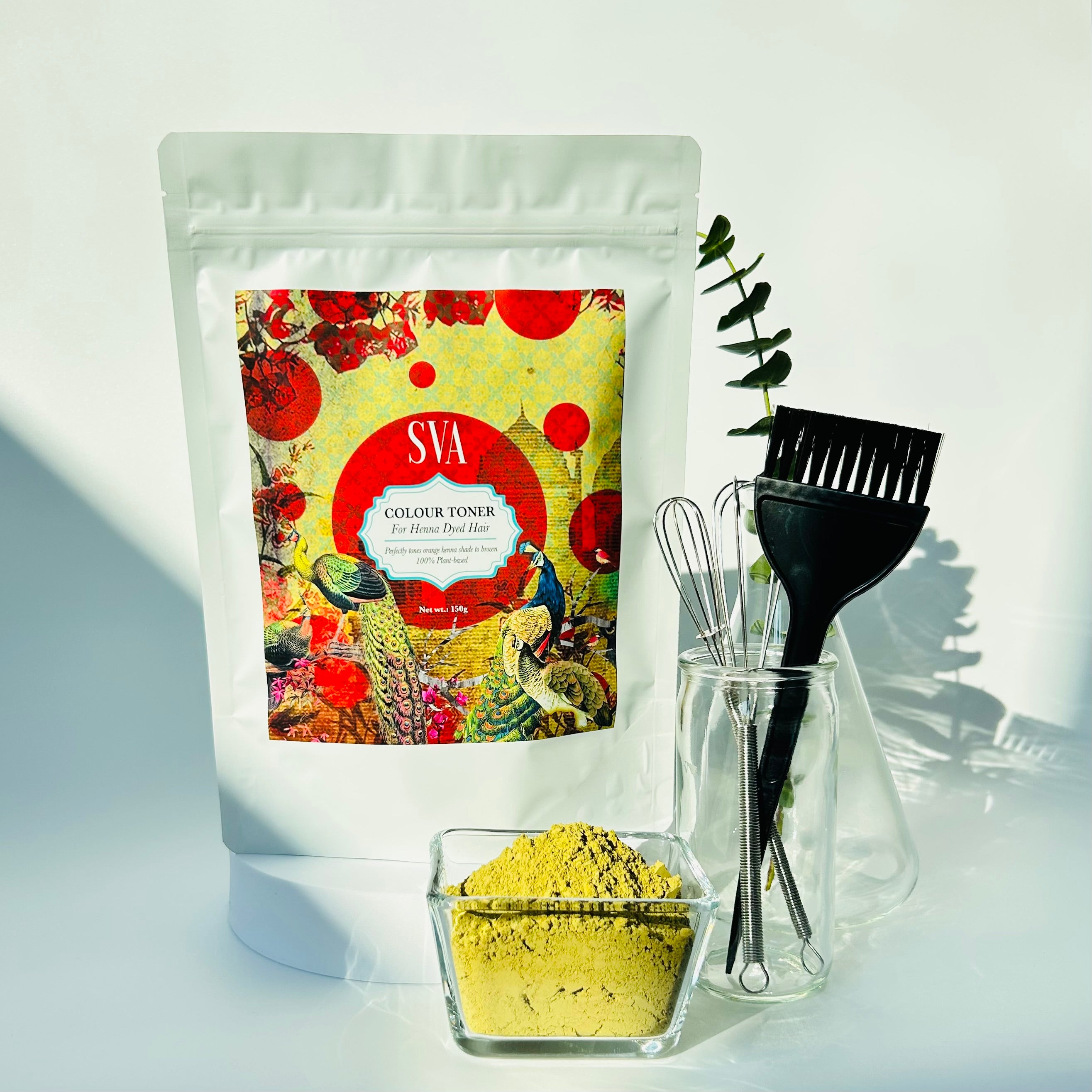
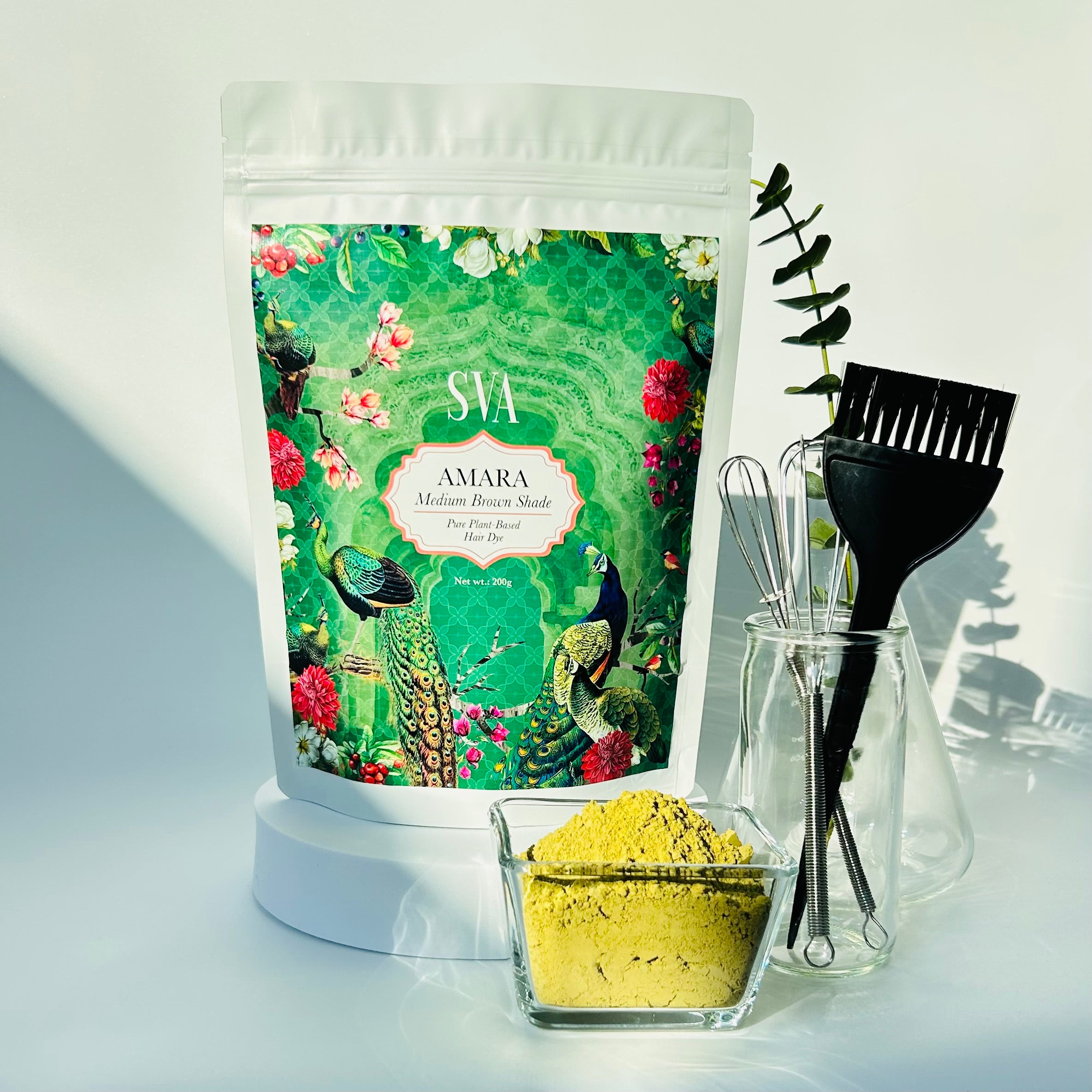
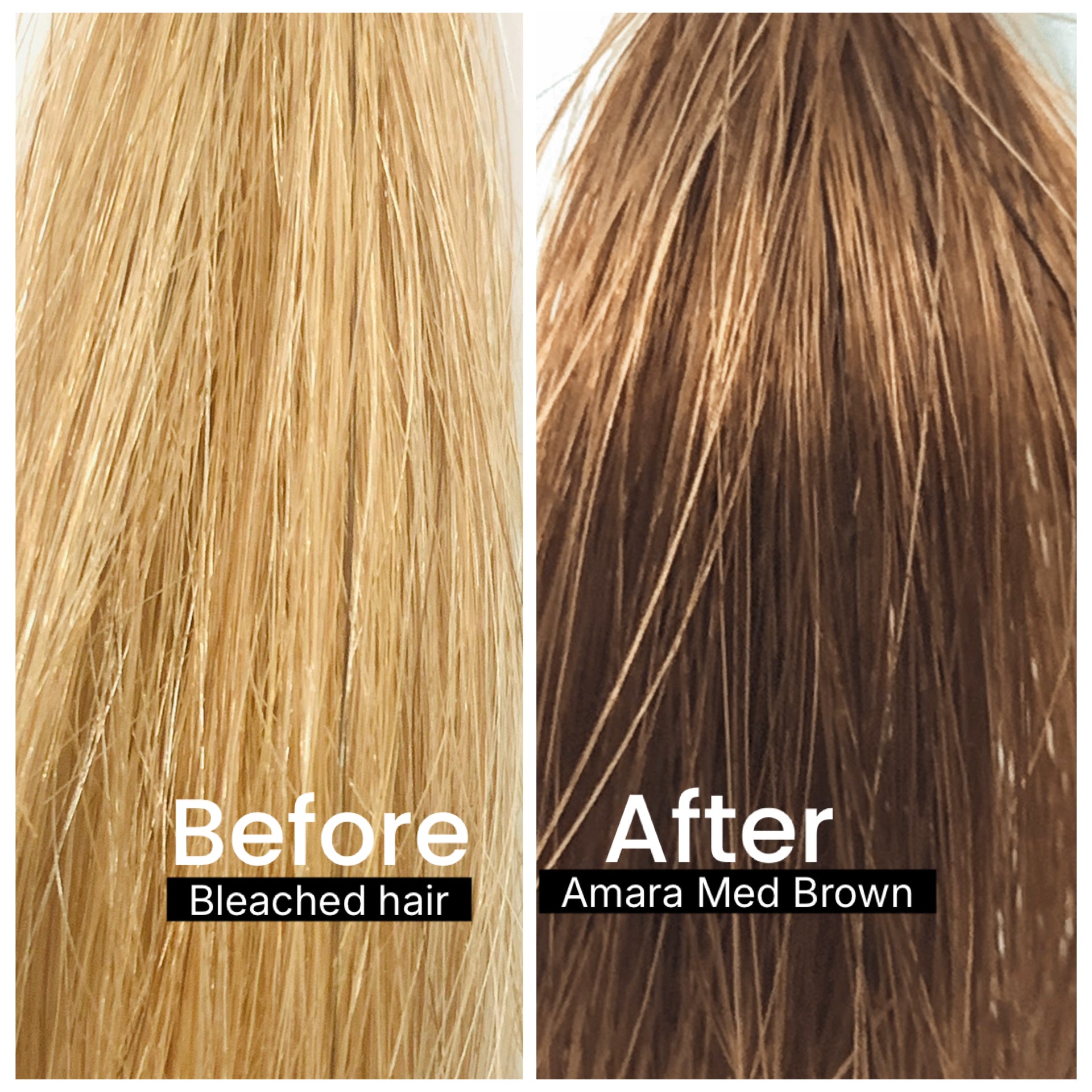
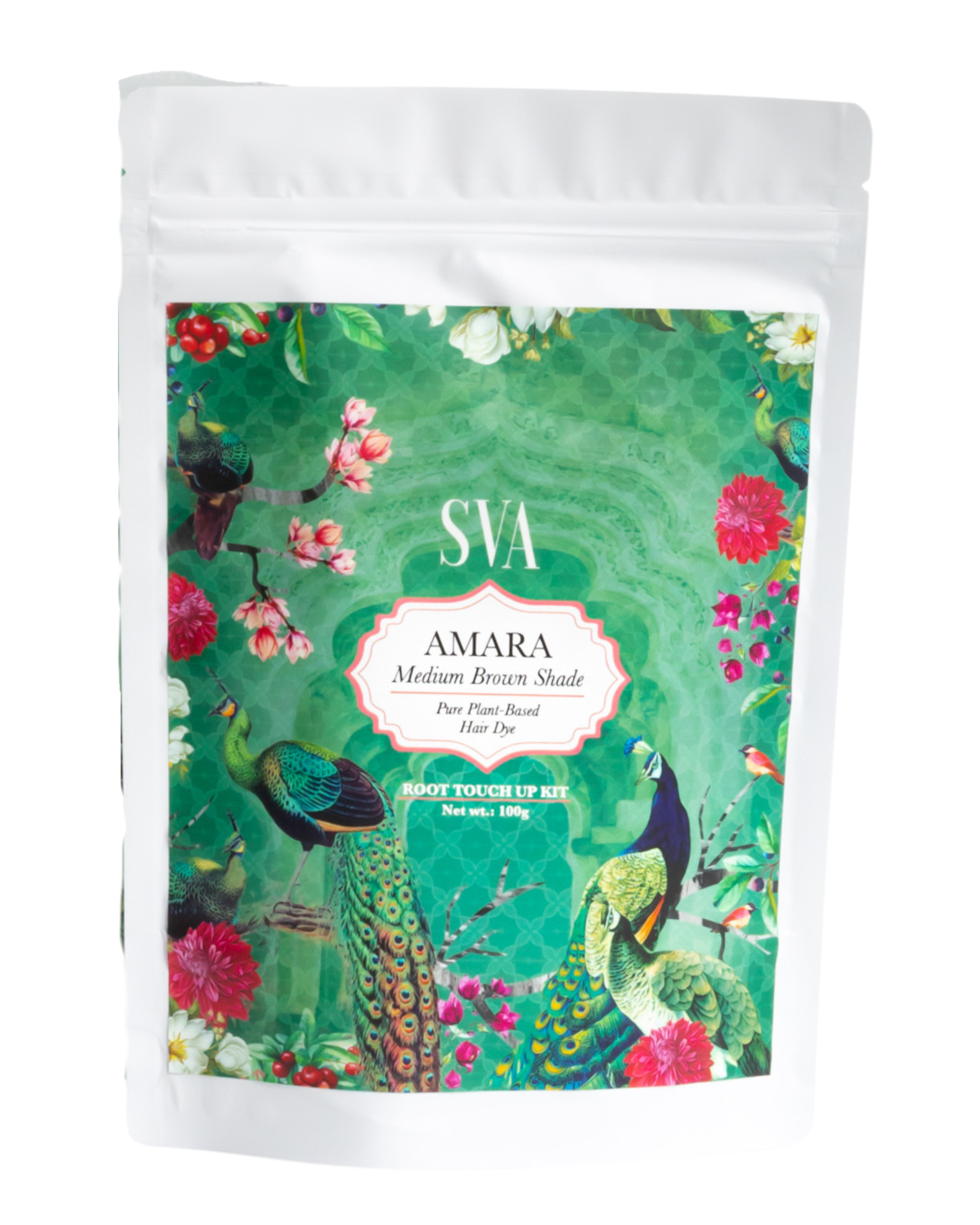
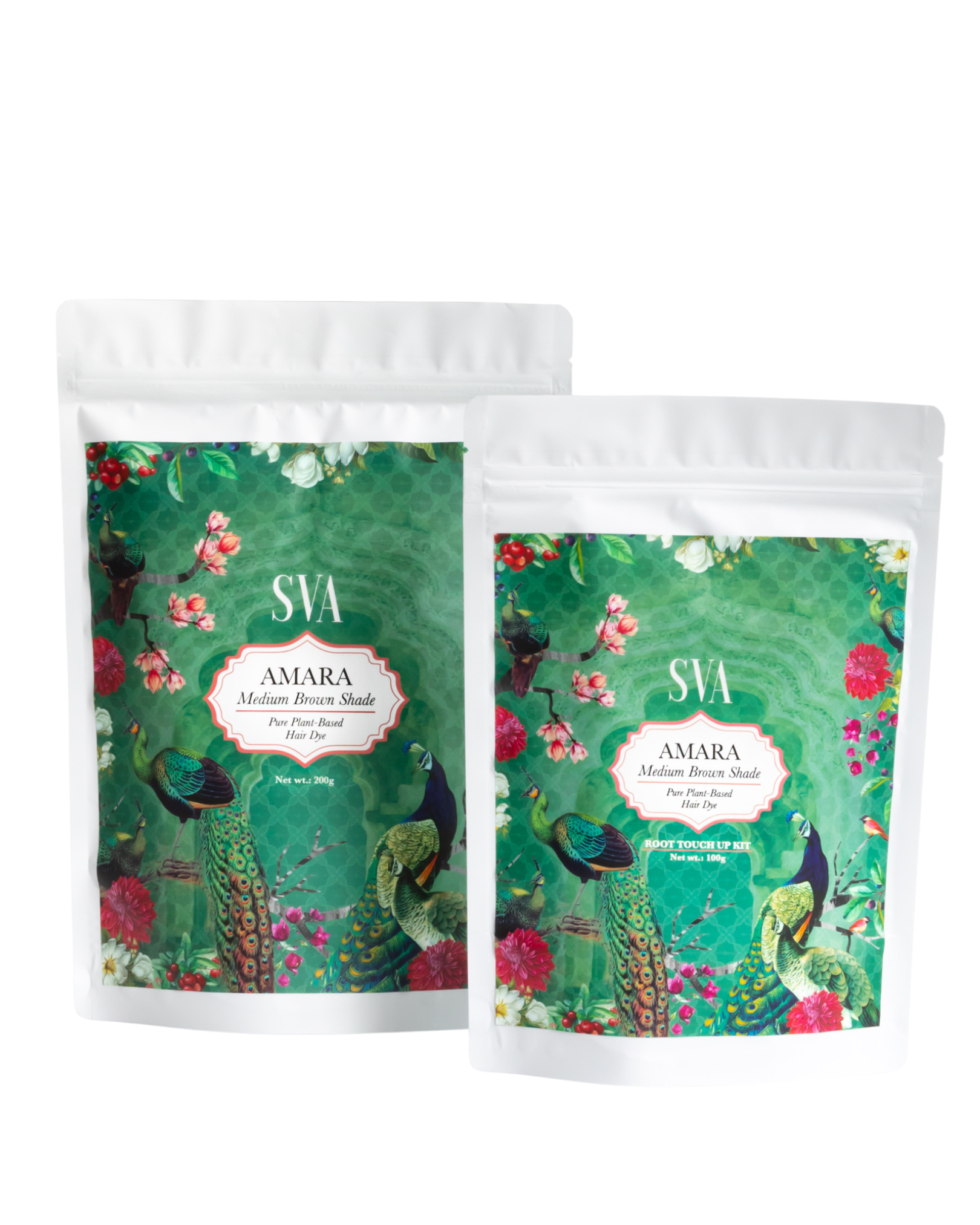
If you are using SVA 1-step kits or 1-pot mixes like Amara Medium Brown, Amrapali Deep Brown or Ellora Dark Brown, these require overnight-soaked henna to be blended with freshly prepared indigo paste, right before application.
The challenge with 1-pot mixes is that everything must align in perfect coordination — the pH, timing, blending, application, migration, binding and oxidation of two plant pigments: lawsone from henna and indigo from indigo leaf powder. Both dyes are essentially competing with each other and against time to migrate, bind and oxidise. To top it all, at times, the indigo precursor oxidises outside the hair fibre and washes out with shampooing. Individual hair parameters — particularly grey type, percentage greys, colour contrast, scalp type, porosity and resistance — further compound this challenge.

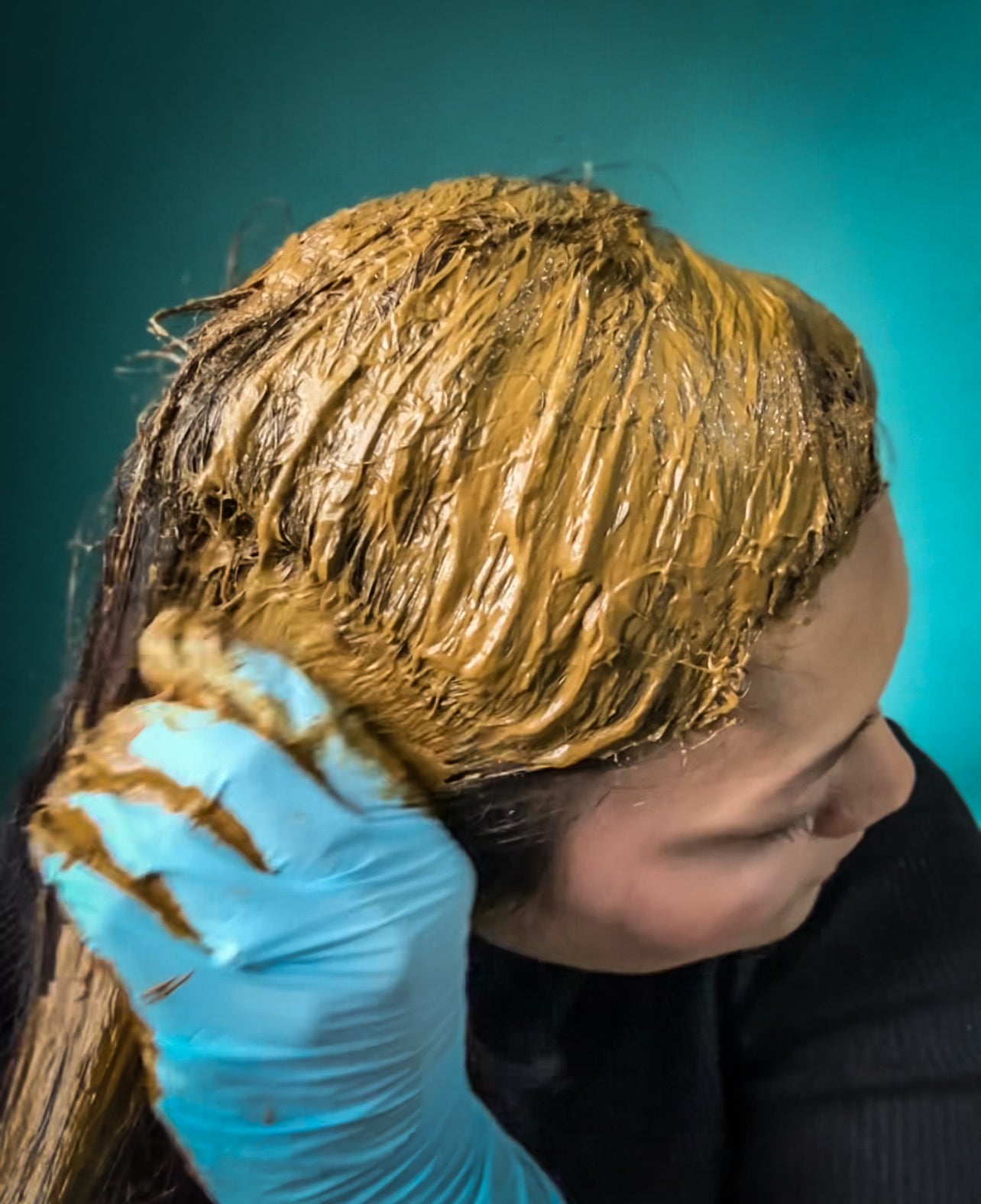
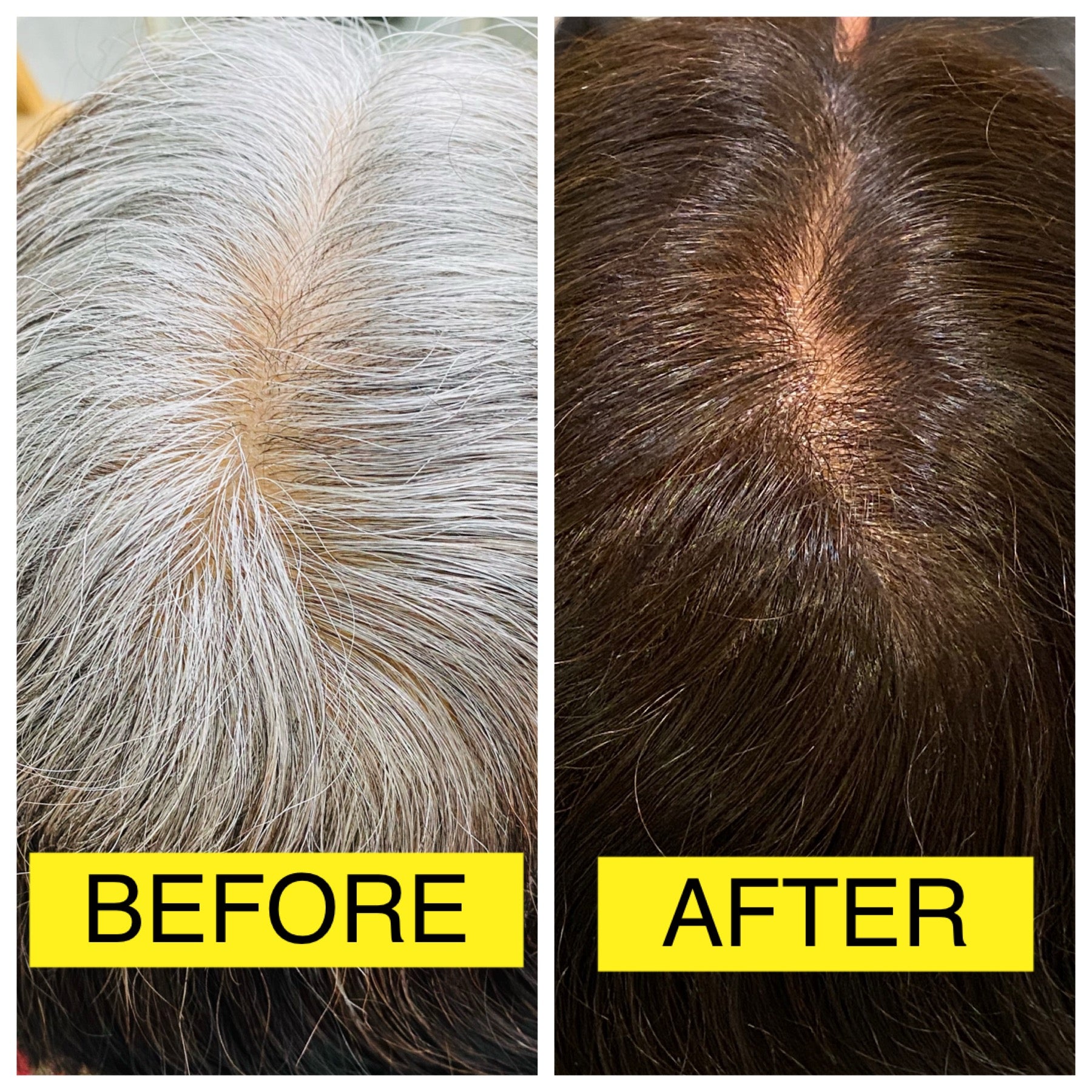
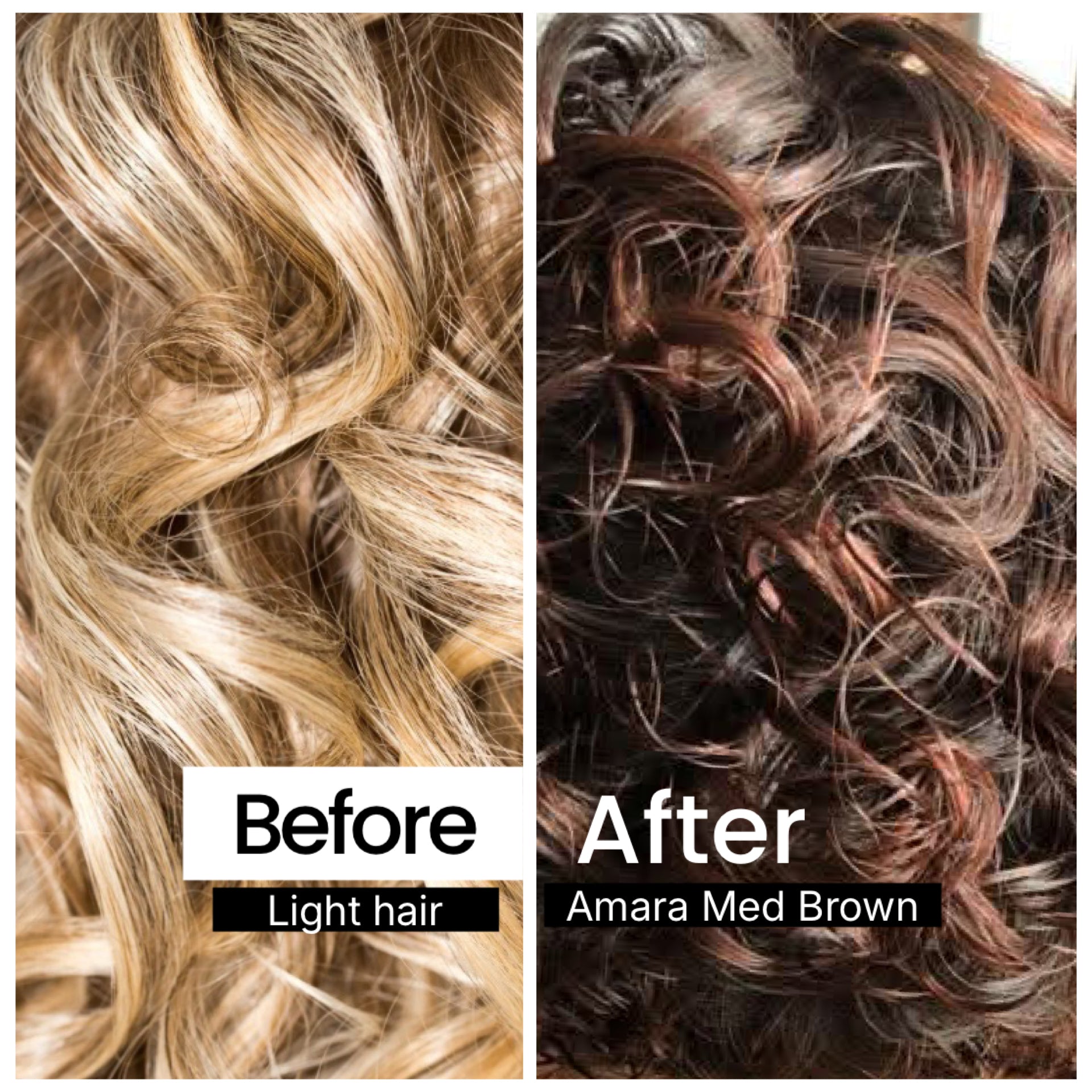
1-pot henna-indigo mix applied on hair. Please note: Coverage and colour results may vary from person to person depending on hair porosity, texture, grey percentage and application technique.
The 2-Step Advantage: Why Sequence Changes Everything
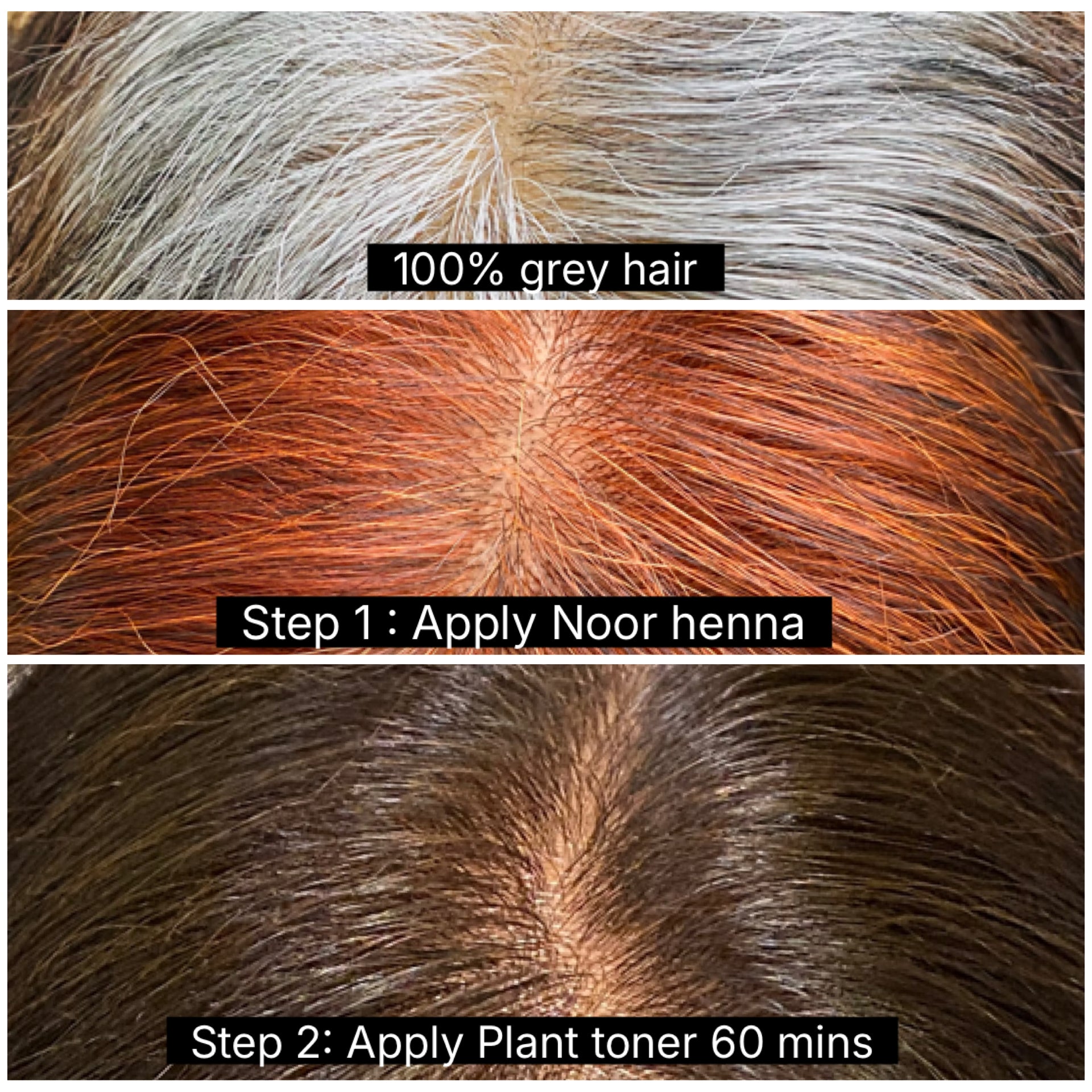
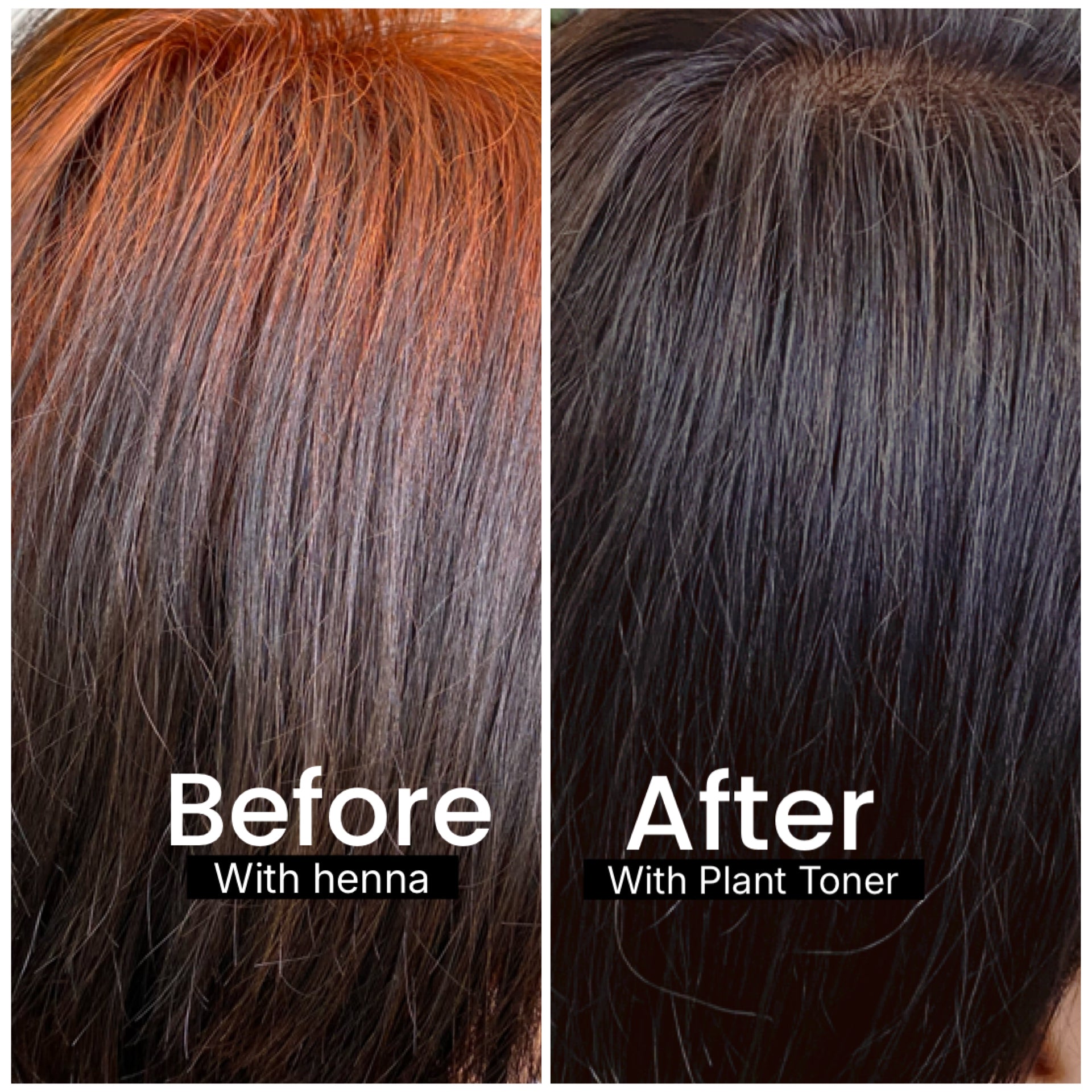
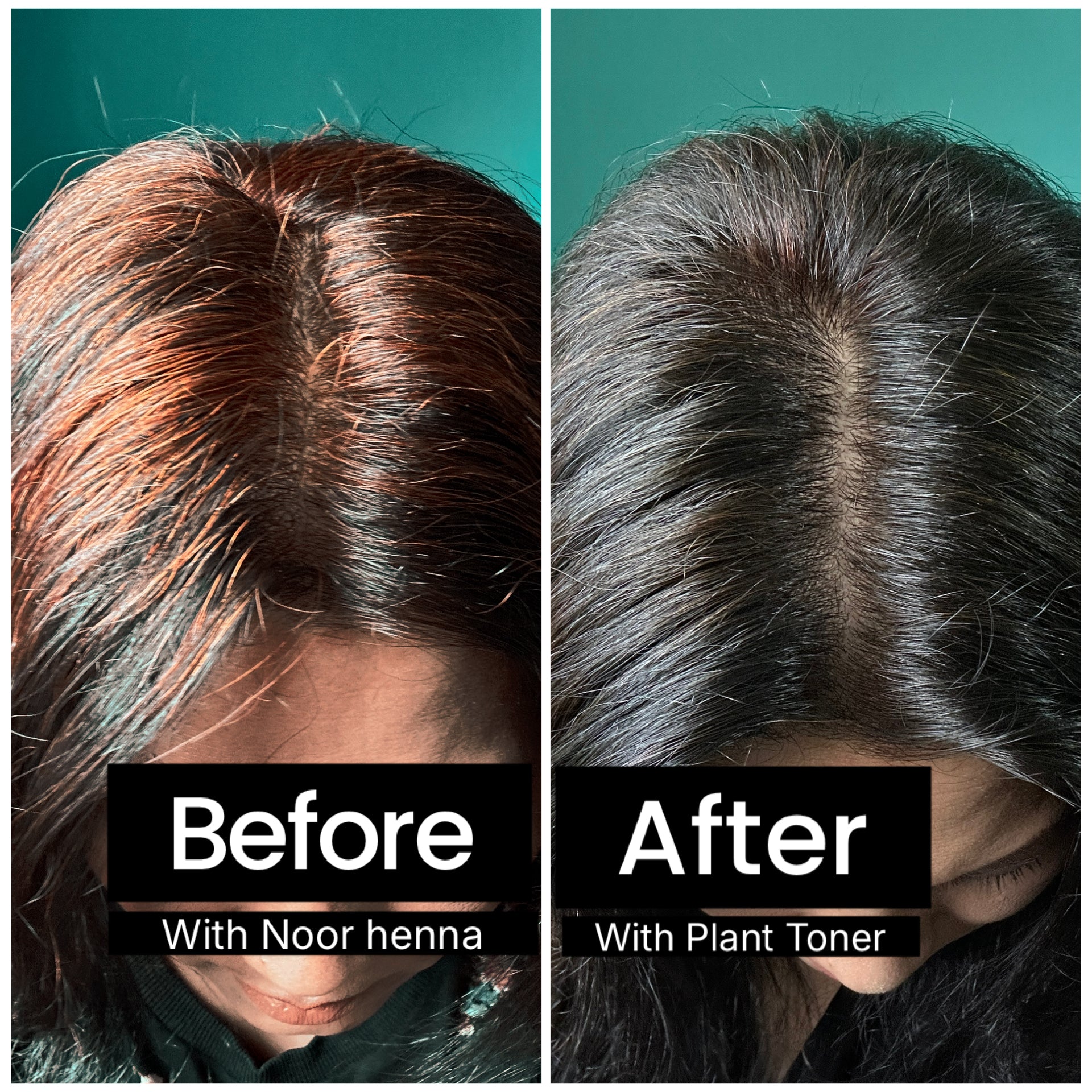
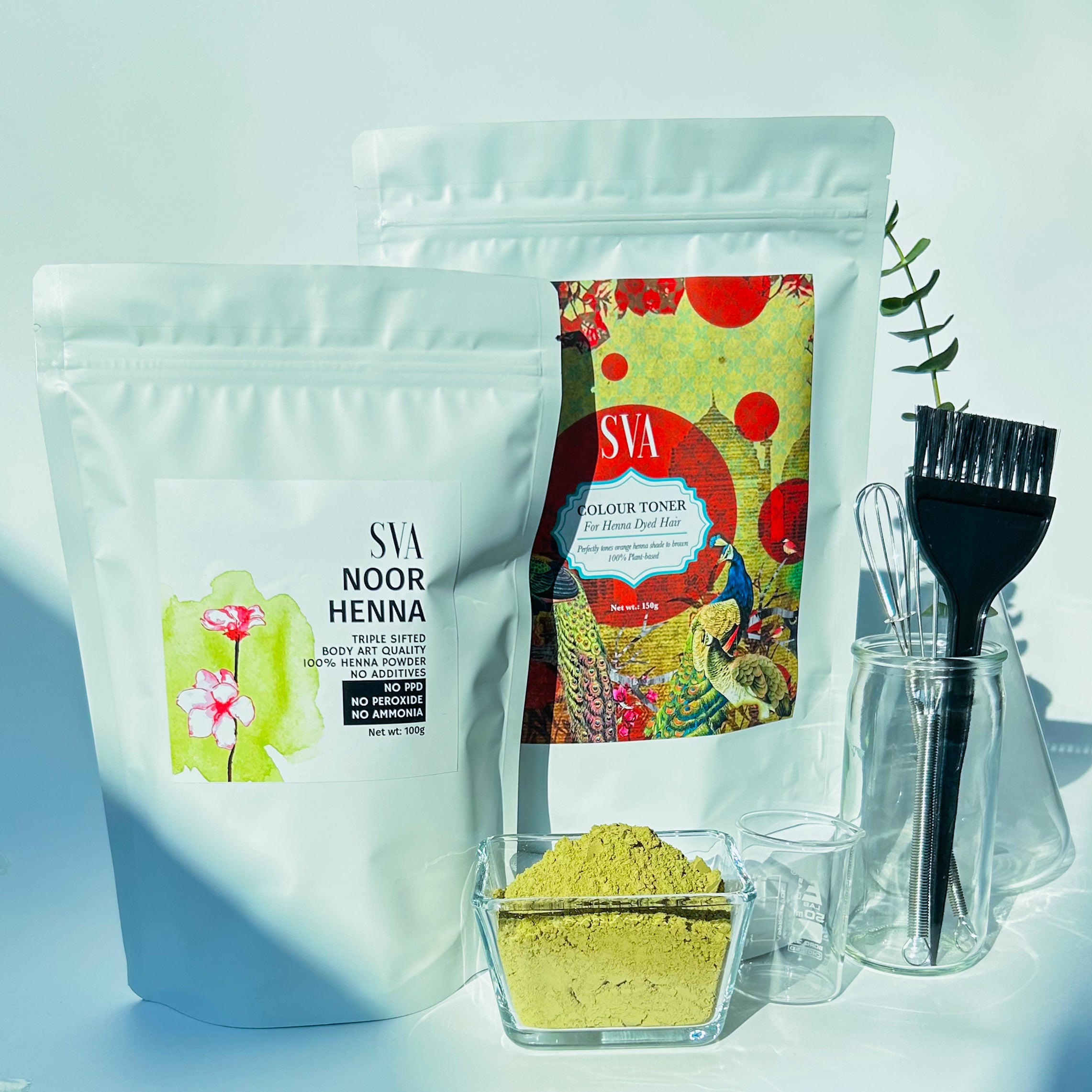
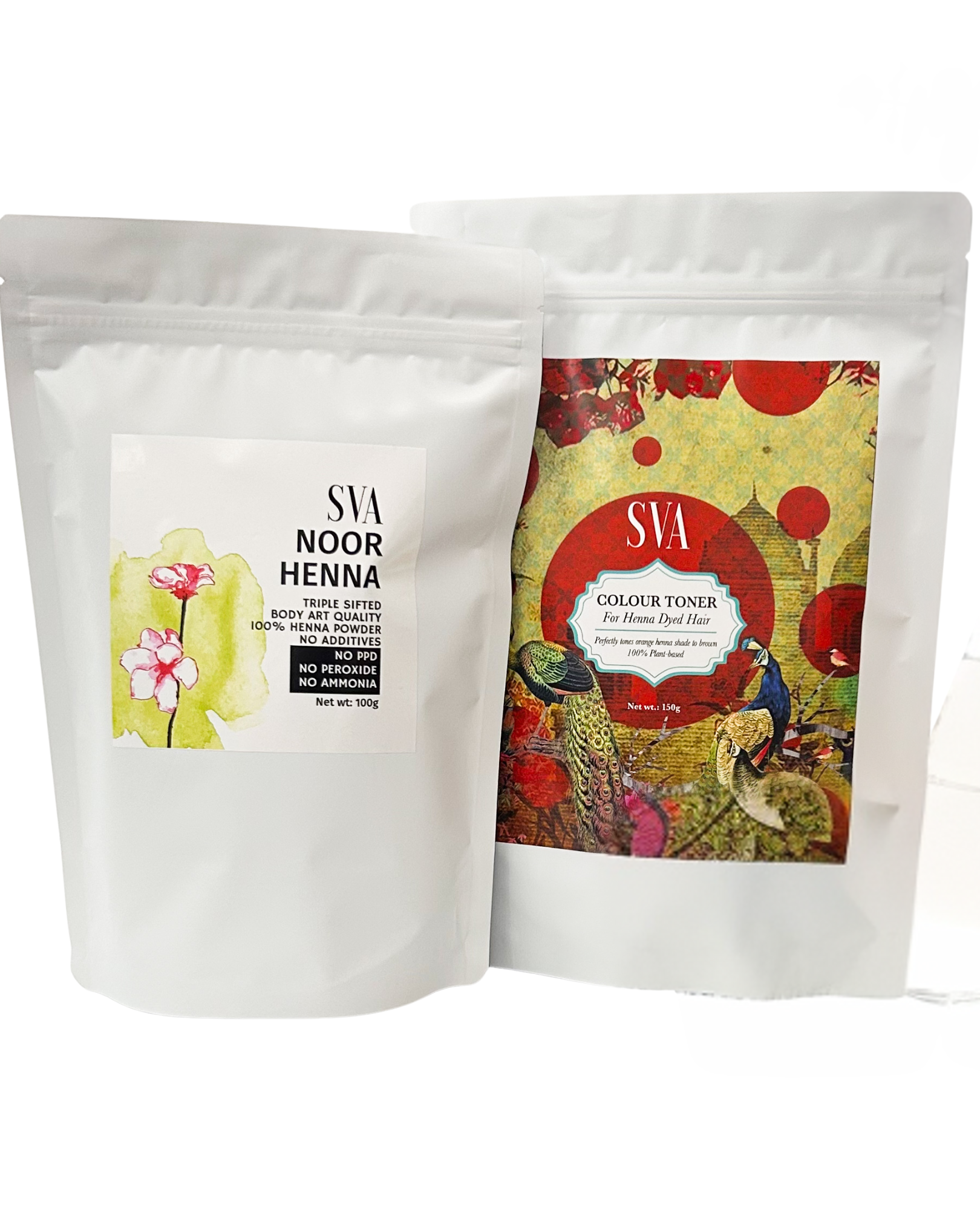
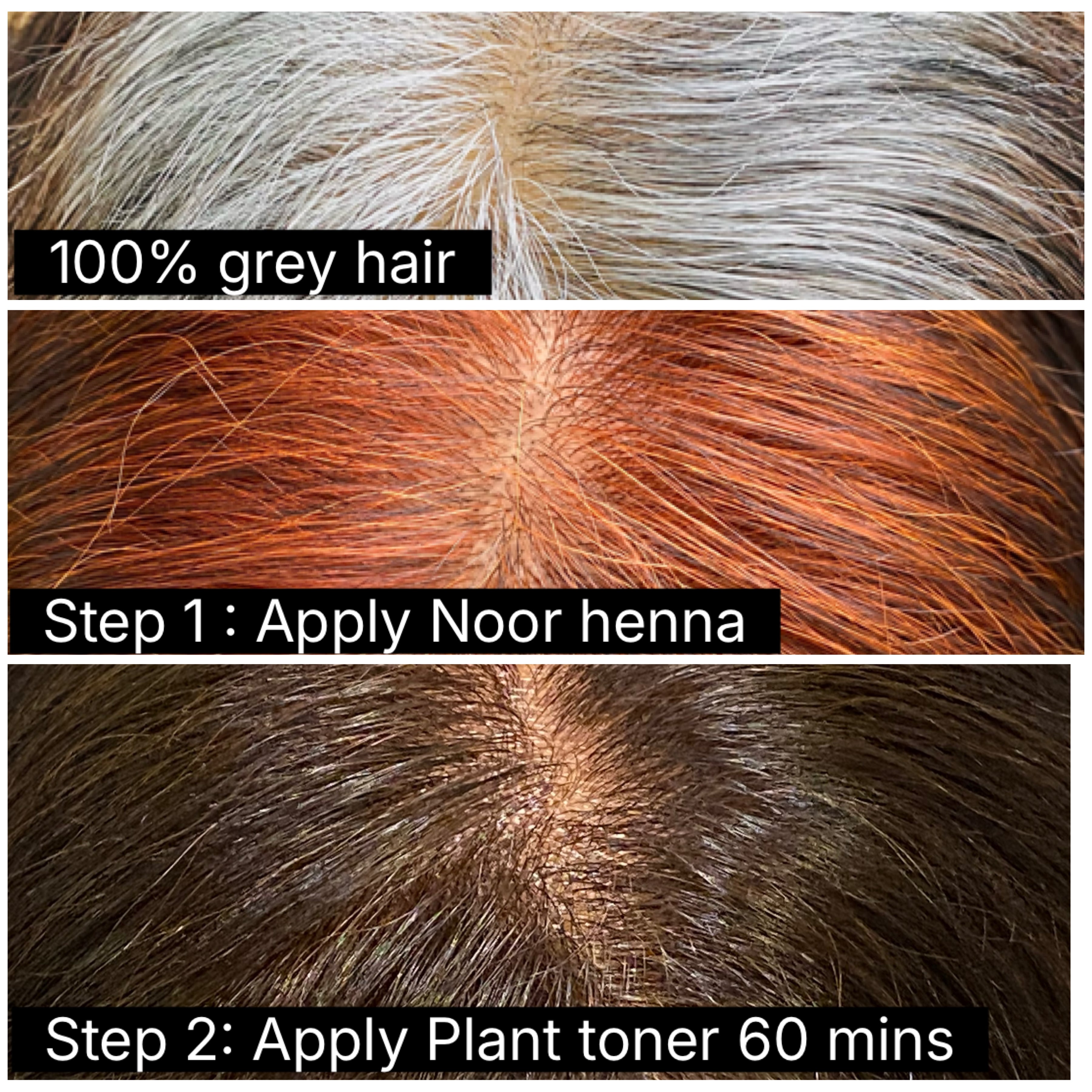
In the 2-step process, used in SVA kits like Raatrani or the Noor Henna + Plant Toner combo, the longevity profile changes completely. Here, the hair is first treated with henna, creating an ideal substrate for indigo to settle into — almost like a key fitting into a lock. Indigo no longer has to compete with lawsone for migration, deposition or oxidation within the same application window. Because it can saturate the henna-treated hair more effectively, the resulting colour is typically deeper, more even and longer-lasting. When applied correctly, the 2-step process generally delivers 100% grey coverage.

SVA's signature 2-step process for 100% coverage, colour and hair conditioning. Don't miss the beautiful shine this treatment adds to dry, dull tresses.
The bottom line: Indigo is not just a dye — it is a lesson in patience, chemistry and the beauty of working with nature. Understanding how it behaves is the first step to getting the colour & coverage you truly want. In Part 3, we dive into the science-backed protocol for making your plant-based colour last longer — stay tuned.
In Part 3, we bring it all together in a complete, science-backed protocol for grey coverage — read it here.






0 comments