

So, You’re Curious About Plant-Based Hair Colour?
Maybe you’ve been colouring your hair with chemical dyes for years and your scalp is protesting. Maybe you’ve read about the dangers of PPD or ammonia and you’re ready to make a change. Or maybe you simply want to try something gentler, more natural and better for your hair in the long run.
Whatever brought you here — welcome. This guide will walk you through everything you need to know about plant-based hair colour, from what it is and how it works, to how to use it correctly for the best results.
What Is Plant-Based Hair Colour?
Plant-based hair colours rely on natural pigments derived primarily from pure leaf powders of Henna (Lawsonia inermis) and Indigo (Indigofera tinctoria). When blended correctly, these two botanical dyes cover greys naturally in a spectrum of shades ranging from warm Auburn and rich Mahogany to deep brown and jet black. Adding Cassia leaf dyes (Cassia obovata / Cassia angustifolia) unlocks lighter shades, including natural blonde tones. Unlike synthetic formulas, pure plant dyes contain zero ammonia, PPD, peroxide or harsh additives like metallic salts, artificial fragrances, phthalates, PEG derivatives or Amines.

Who Is Plant-Based Hair Colour For?
- Plant-based hair colour is for anyone who wants to cover greys without compromising the health of their hair and scalp. It is especially ideal for women who have been colouring for years and are now noticing dryness, frizz, thinning, scalp sensitivity or dullness from repeated chemical dye use.
- It is for those who want beautiful colour, but not at the cost of burning, itching, strong chemical fumes or long-term hair damage. It is for women who remember henna from the past but want a more refined, modern botanical system — one that gives rich browns, deep blacks, natural-looking grey coverage and healthier-looking hair with consistent use.
- Most of all, plant-based hair colour is for the woman who no longer wants to hide her greys in panic. She wants to care for her hair with intention — choosing pure botanicals that colour, condition, add shine, improve texture and turn hair colouring into a nourishing self-care ritual.
SVA means self in Sanskrit — a reminder that caring for your hair should also be caring for yourself.
In a nutshell, plant-based hair dyes work on:
- All hair types — straight, wavy, curly.
- All hair textures — fine, dry, frizzy, coarse, thinning.
- All grey types — from 0–100% greys (including premature grey).
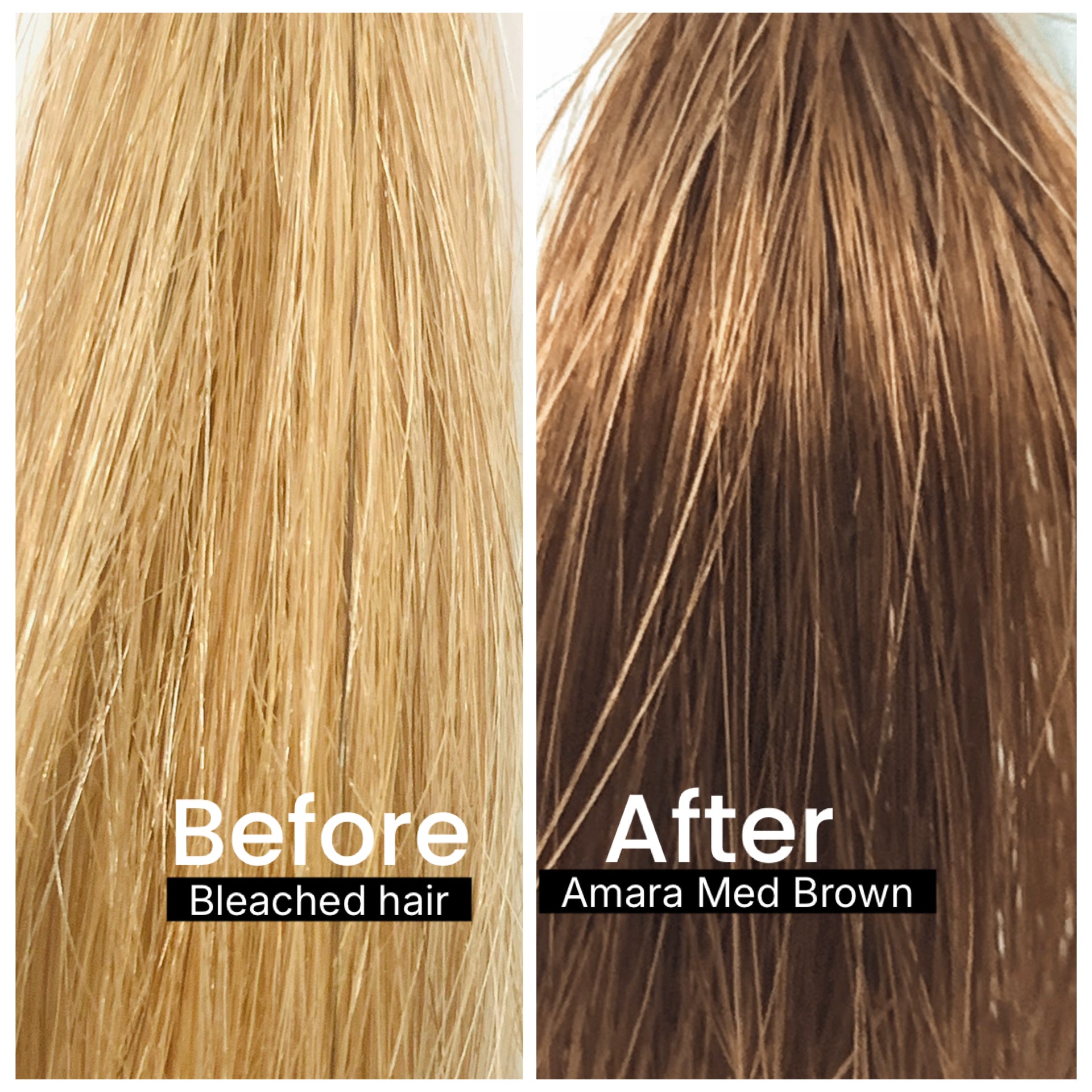
- All treated hair — bleached, chemically dyed, highlighted, keratin treated or straightened.
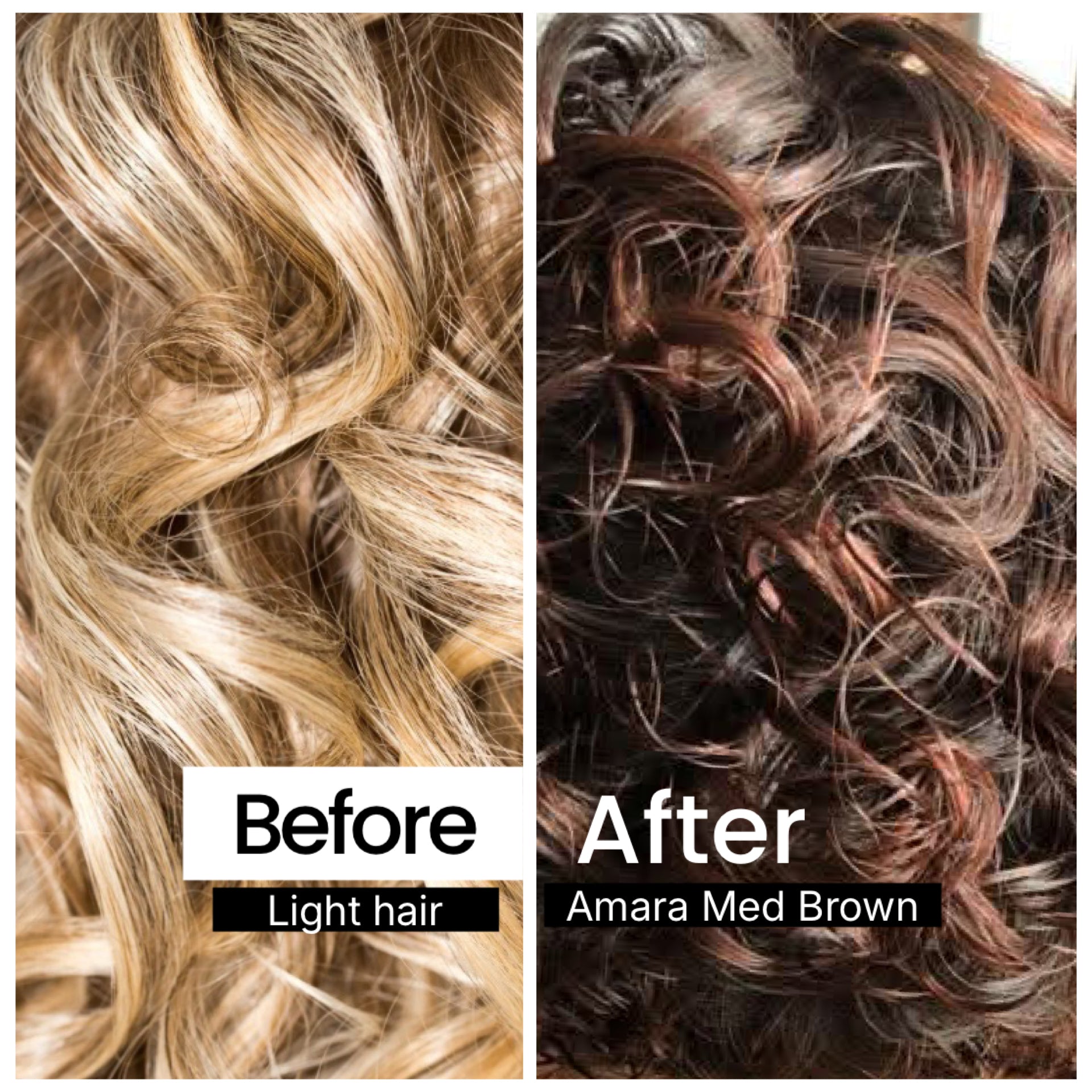
- All natural base colours. Results may vary depending on your current hair colour, grey percentage and combination used.
Choosing the Right SVA Shade for You
Every hair journey is unique, which is why we don’t believe in a one-size-fits-all solution. Backed by over a decade of expertise as a plant-based hair dye specialist — having helped over 1,000 clients repair, transform and manage greys within 6 months — SVA provides personalised guidance to align with your specific hair goals.
We evaluate your hair health, hair type and percentage of greys to build a step-by-step plan using our two primary product approaches:
-
1-Step (1-Pot) Formulas: Designed for convenient, single-application hair colouring where both henna and indigo dyes are blended together at once. Best recommended for those looking for a plant-based alternative to cover greys. Works well for less than 50% greys with low to medium contrast between greys and base hair colour. Examples:
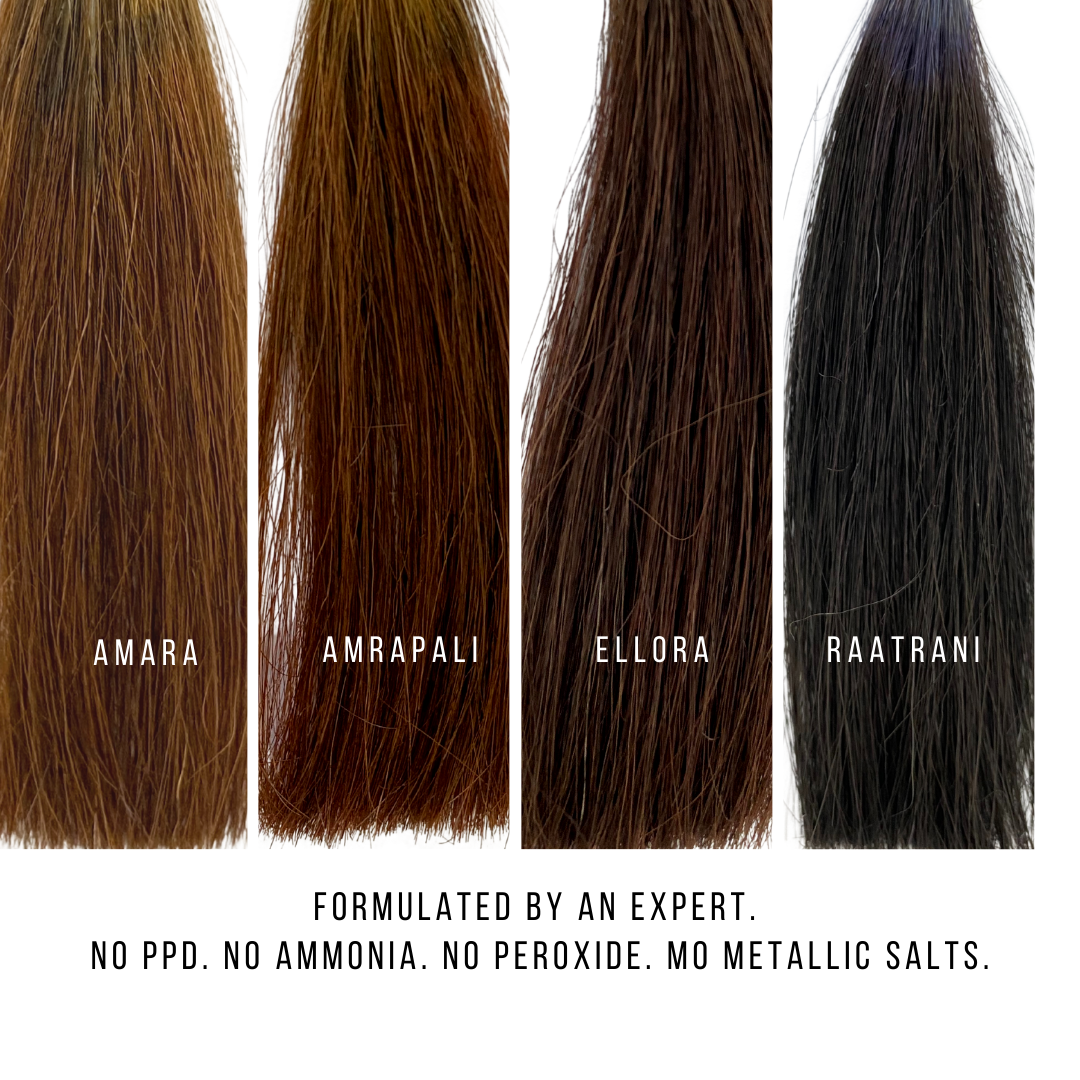
- SVA Amrapali — One-step application for a deep brown shade.
- SVA Ellora — One-step application for a dark brown shade.
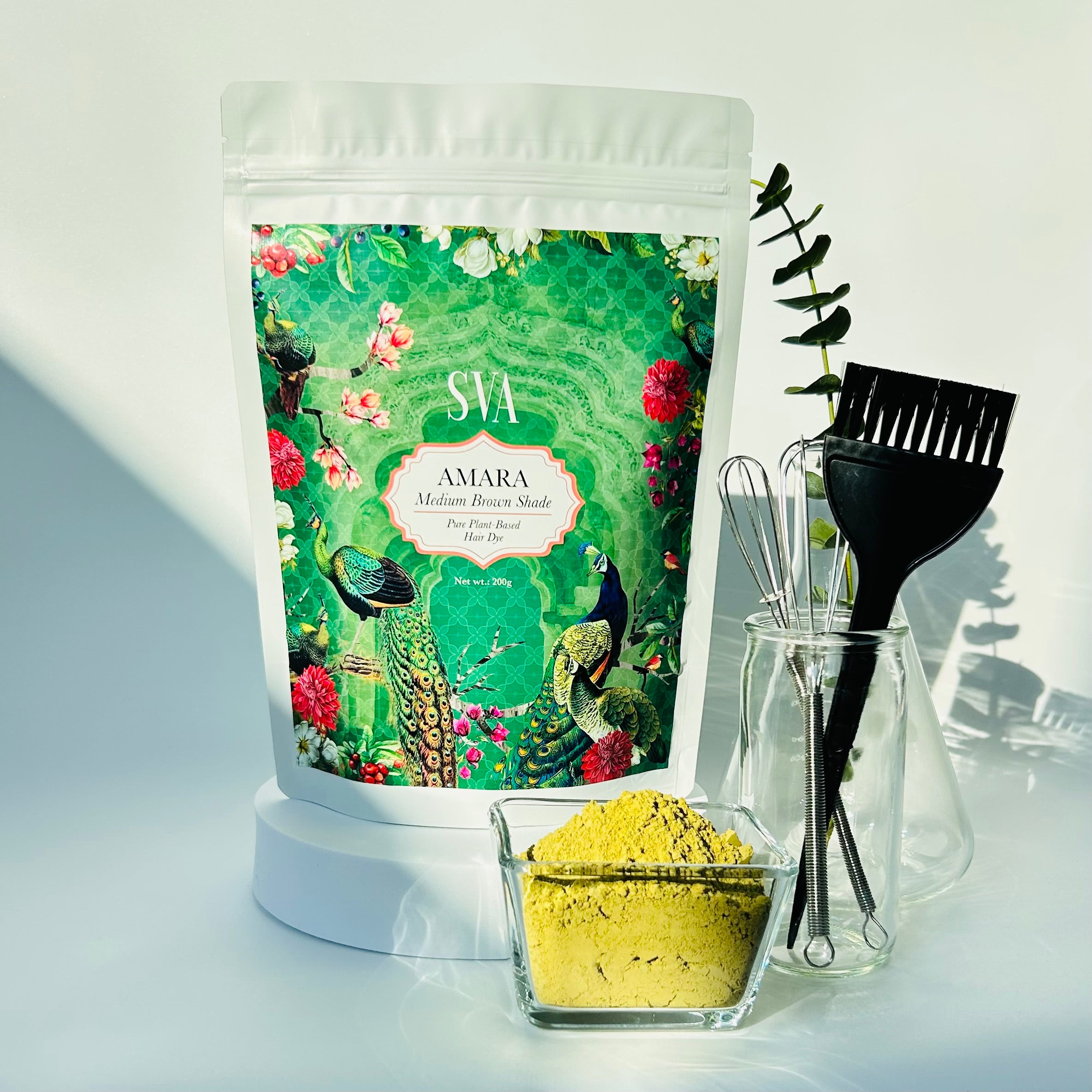
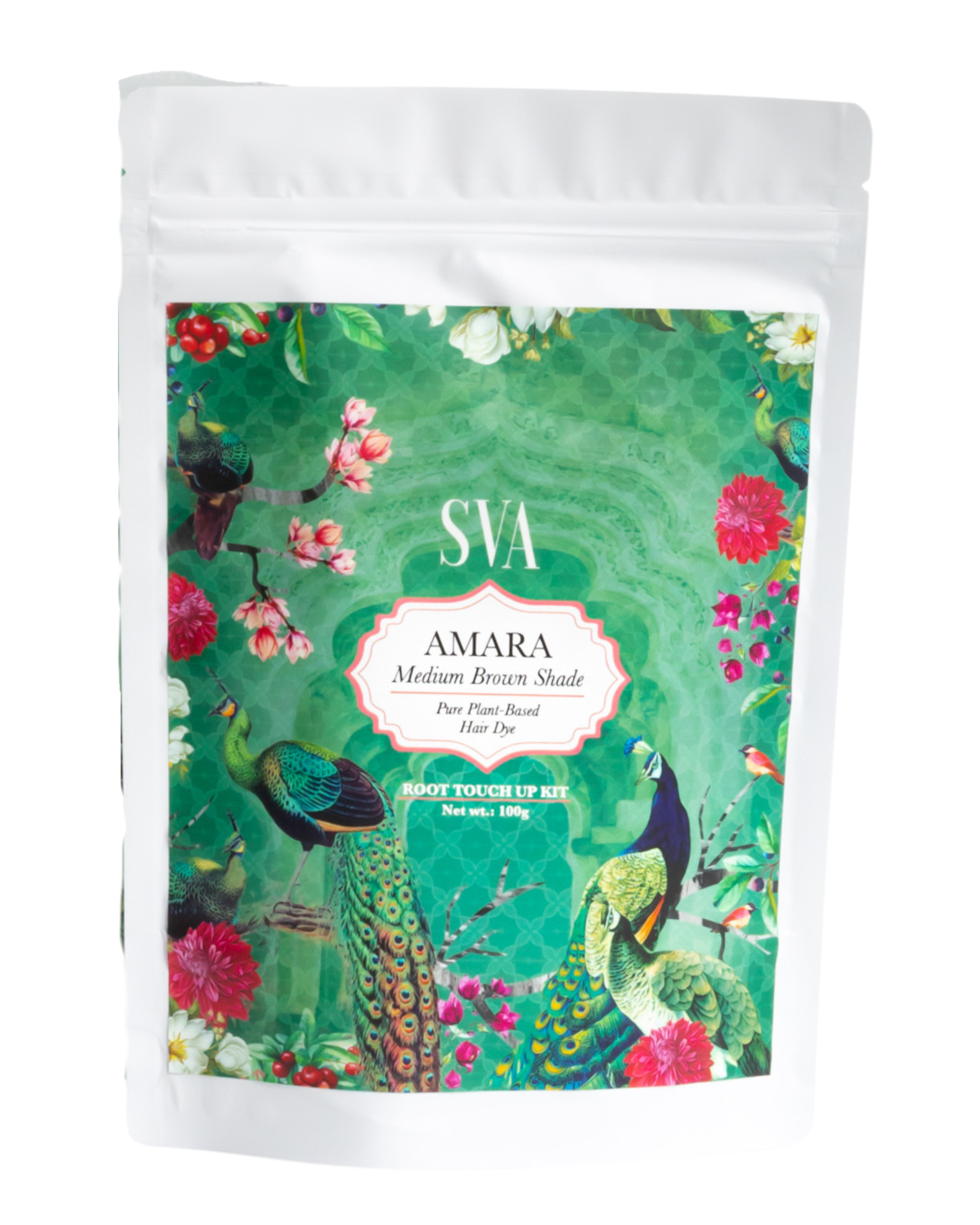
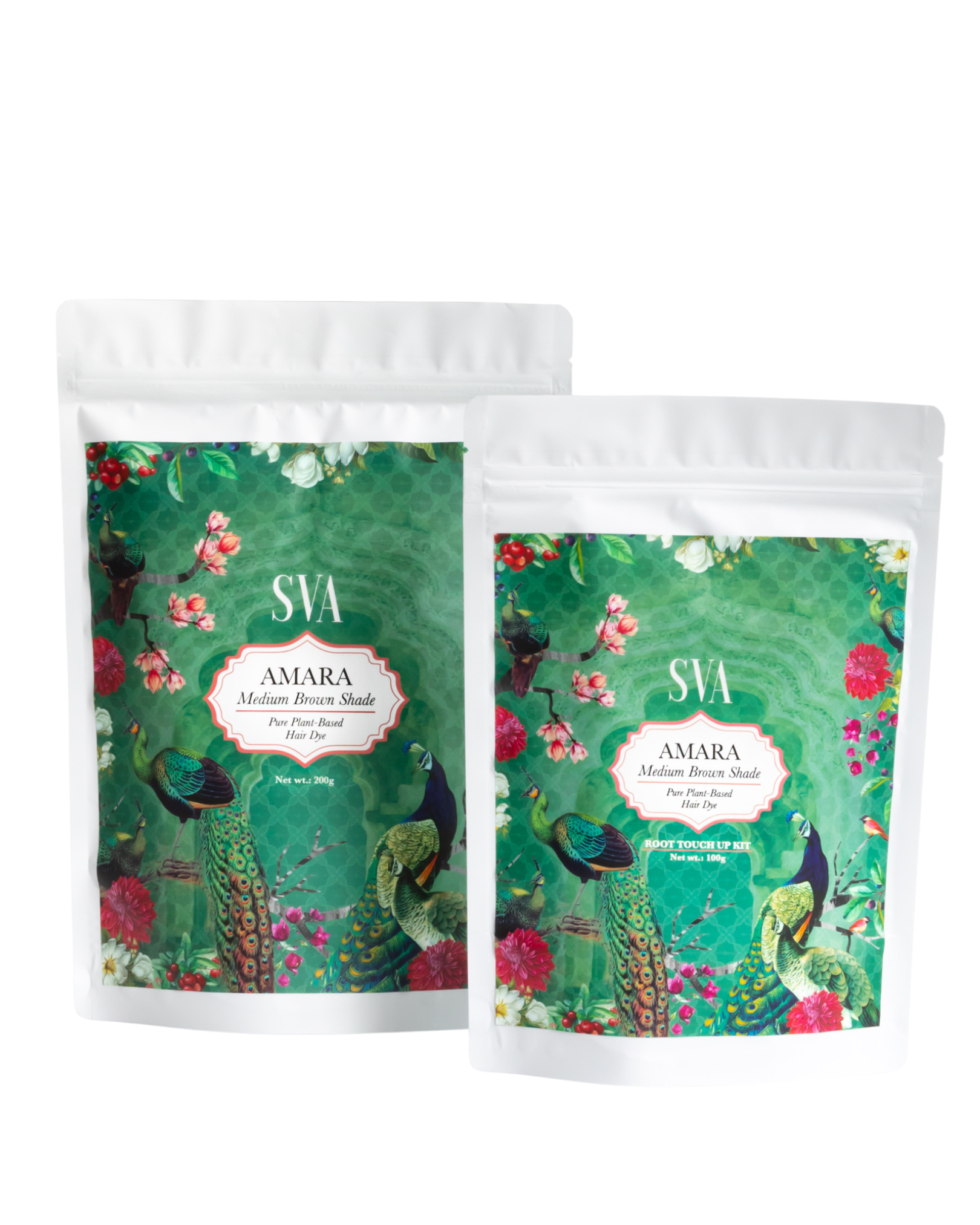
- SVA Amara — One-step application for a medium brown shade.
- SVA Noorie — One-step application for a copper shade.

-
2-Step Combinations: Designed as a double-processing hair colour protocol for long-lasting colour and 100% grey coverage across low to high contrast. Best recommended for those wanting a total hair transformation, especially those struggling with dry, frizzy hair who want to repair and restore their hair to its original glory. Examples:
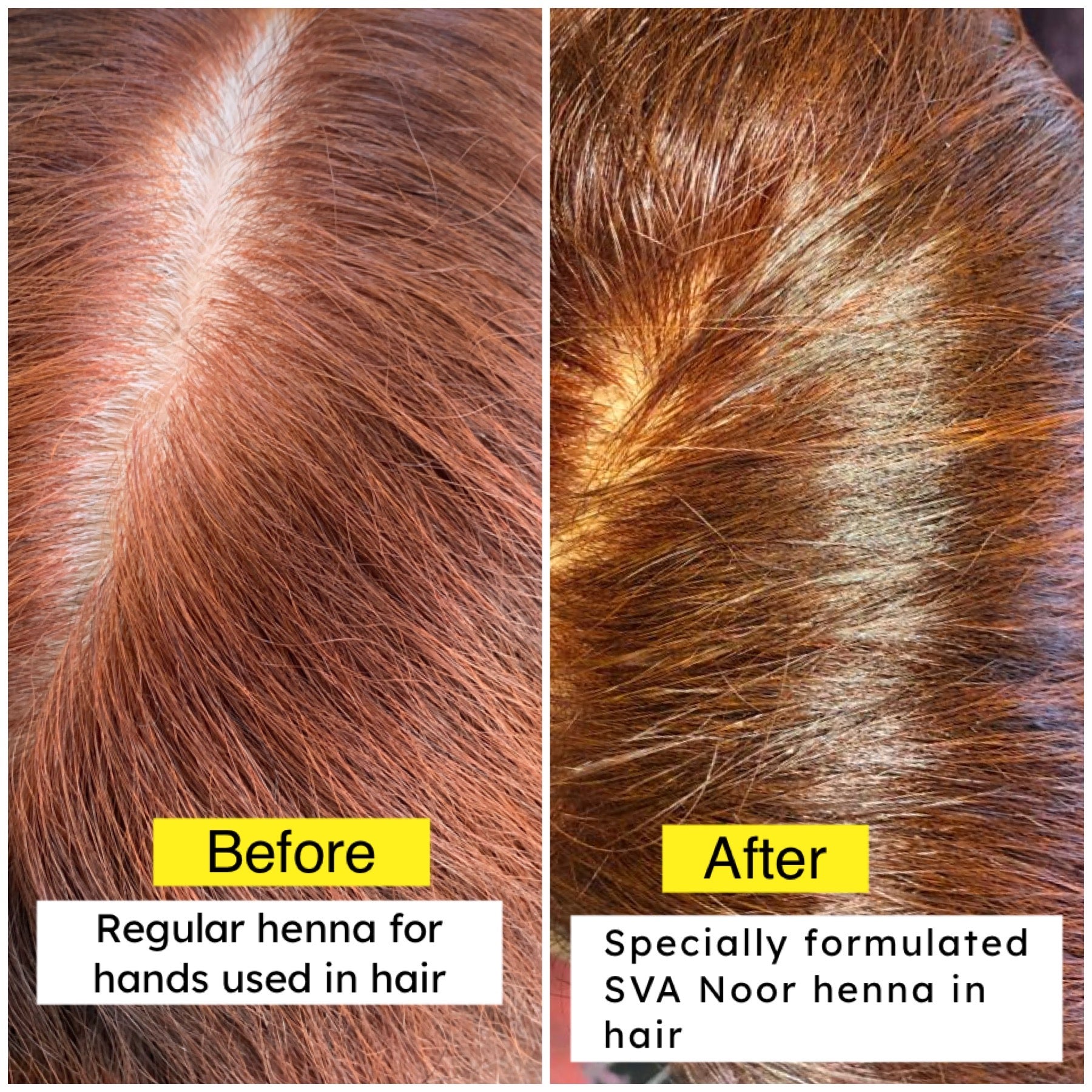
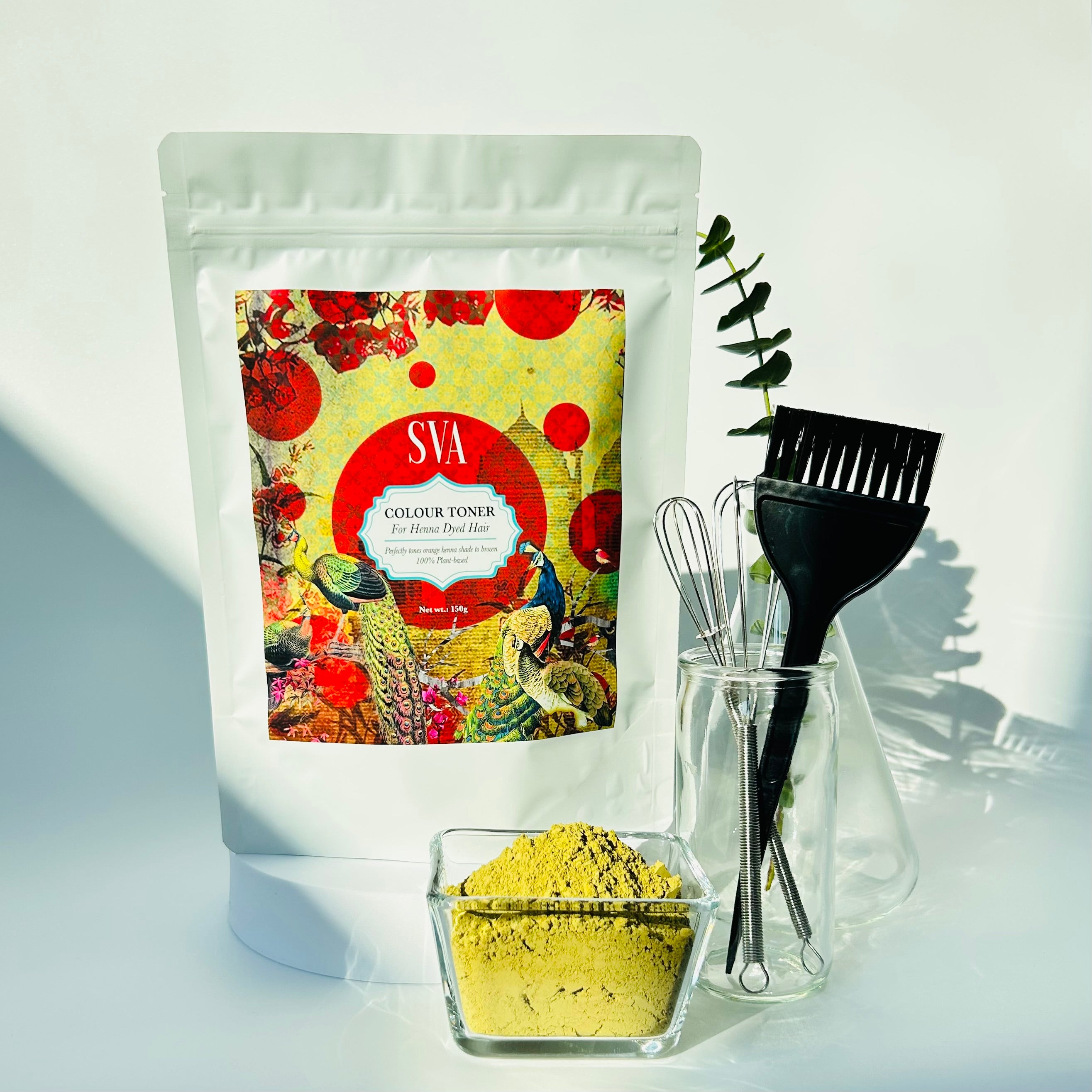
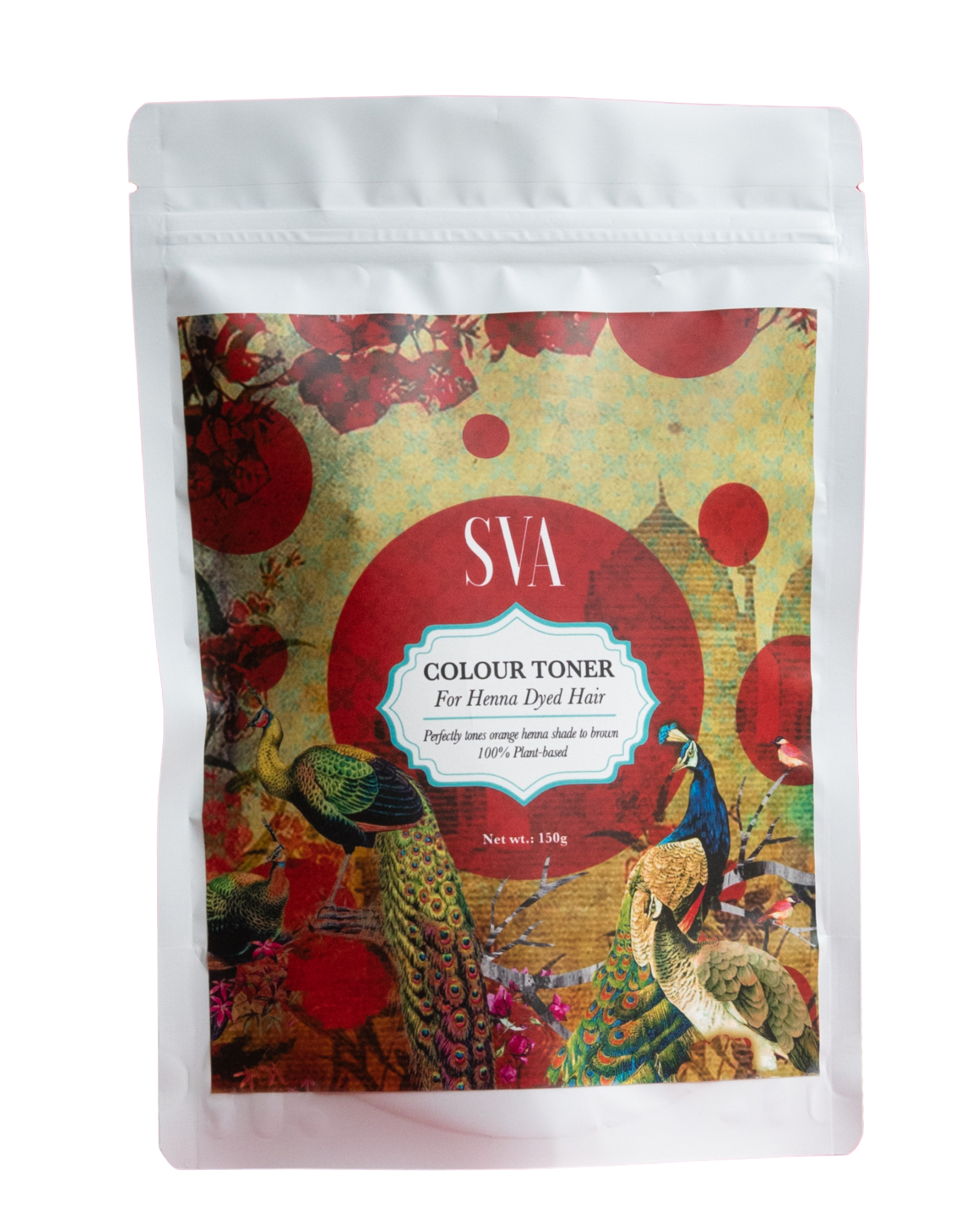
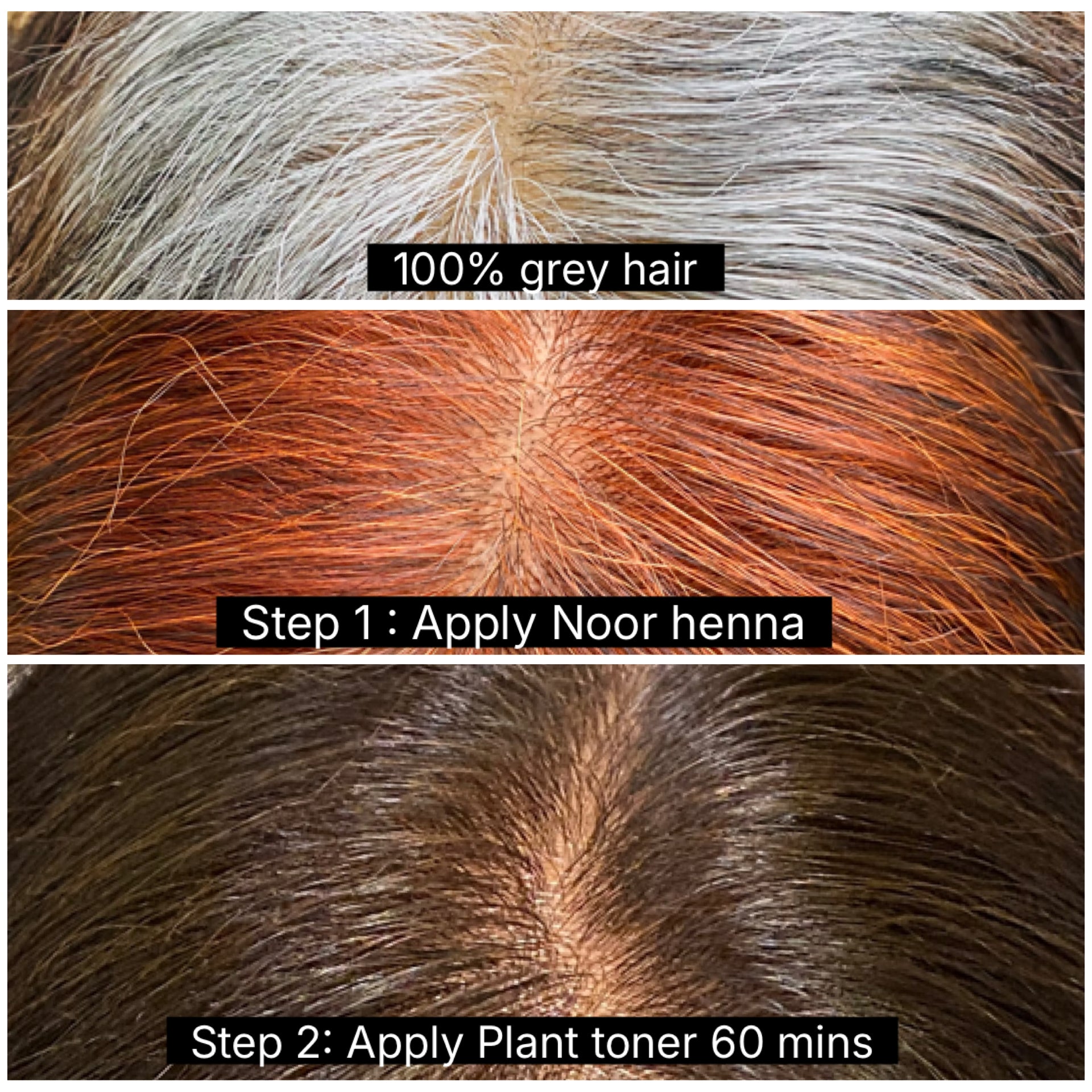
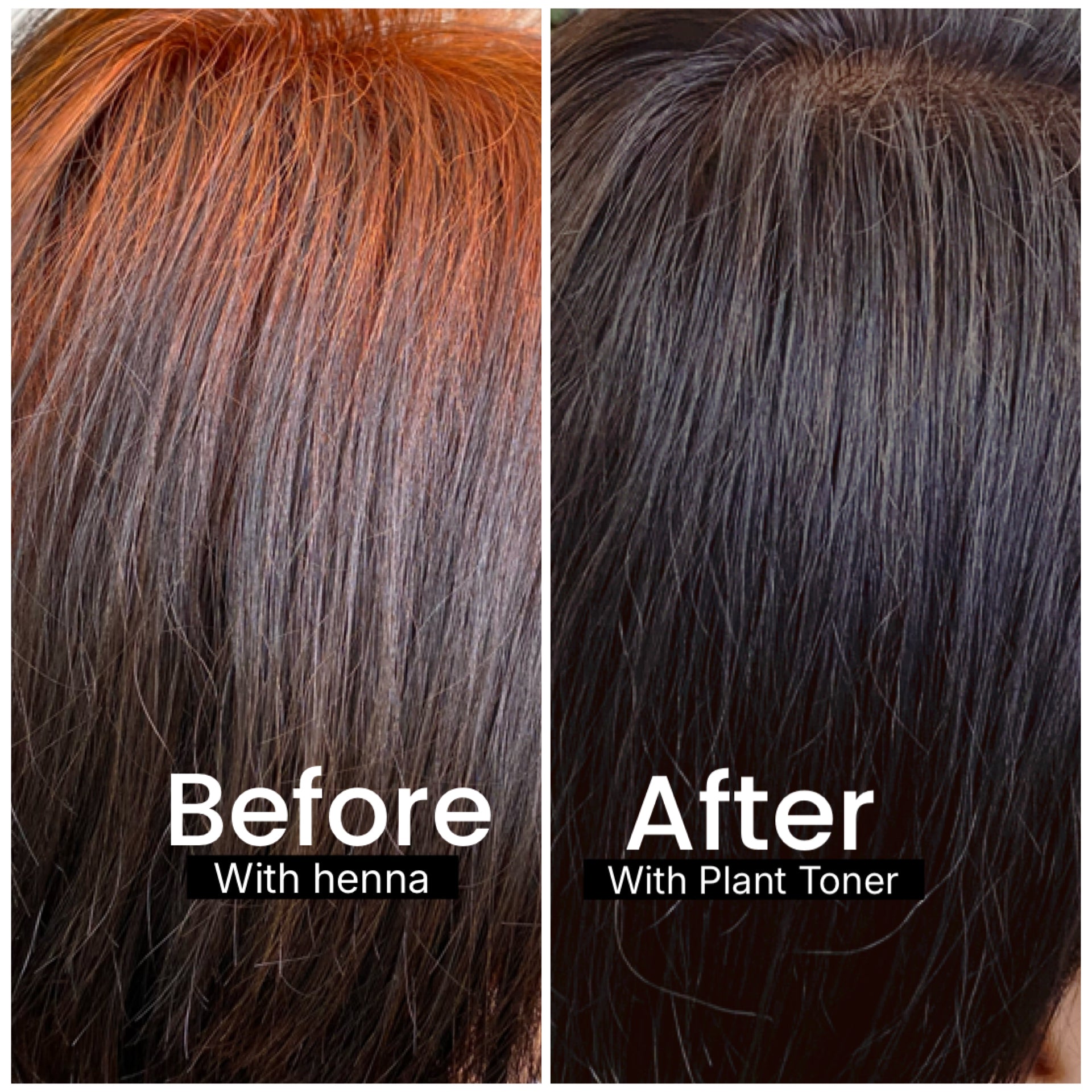
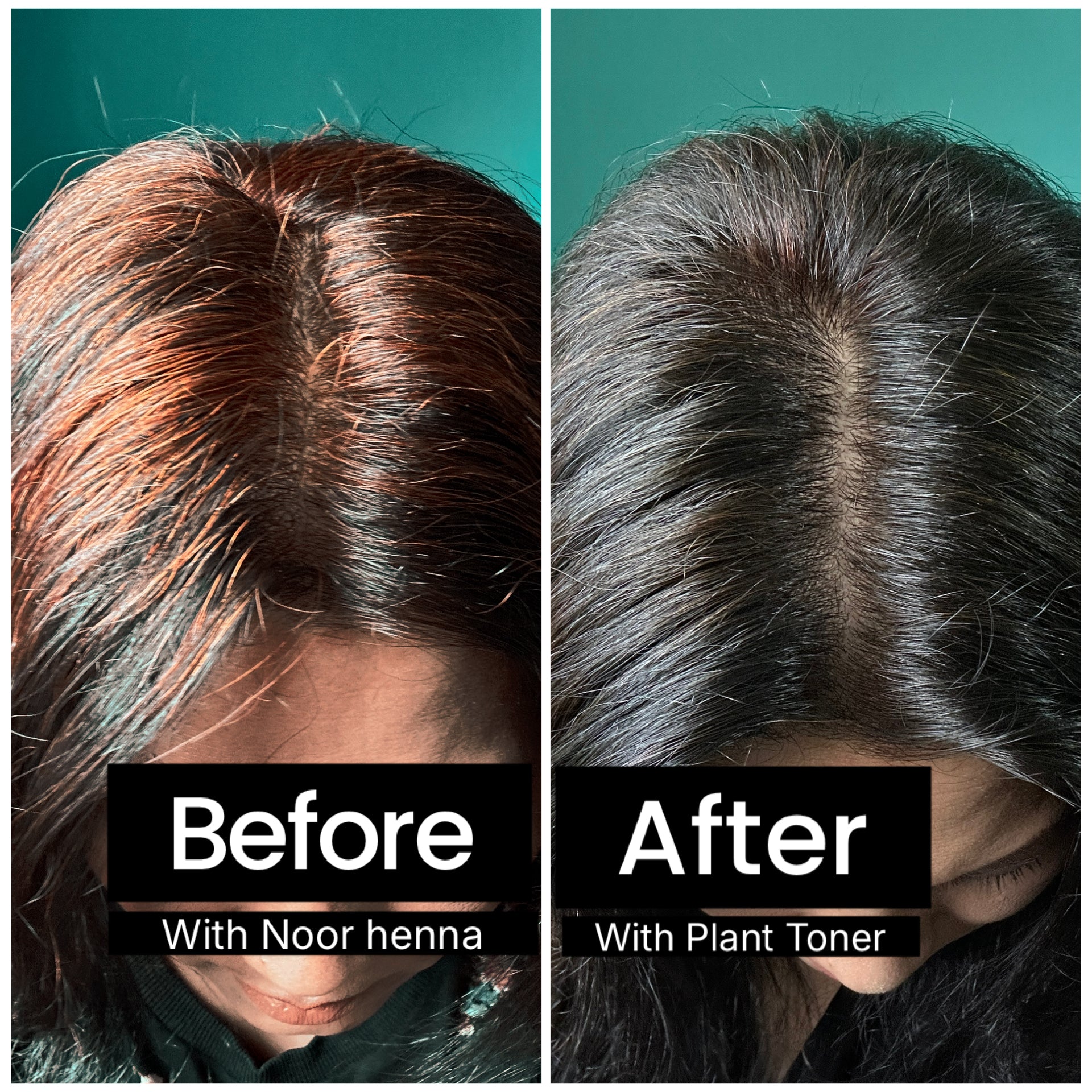
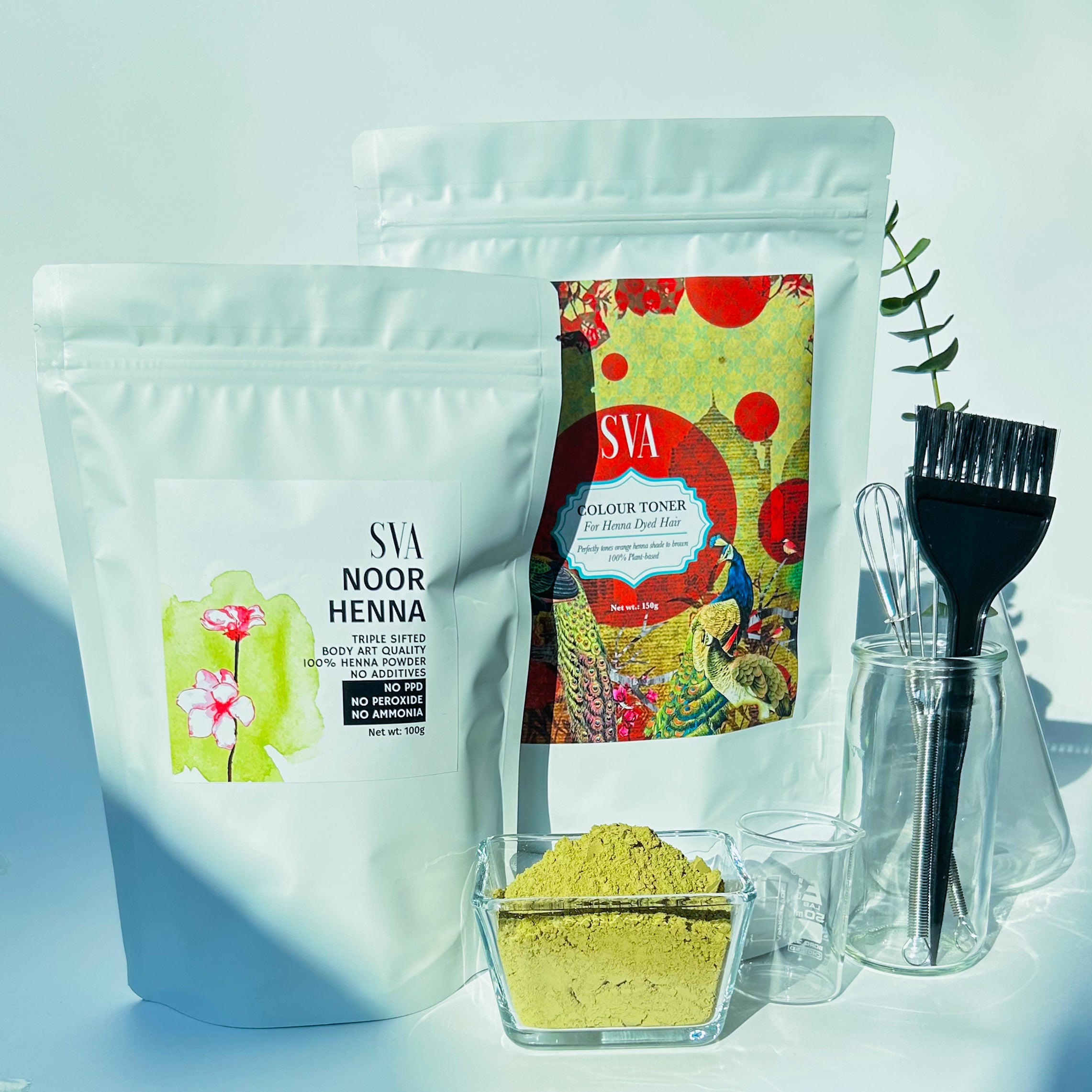
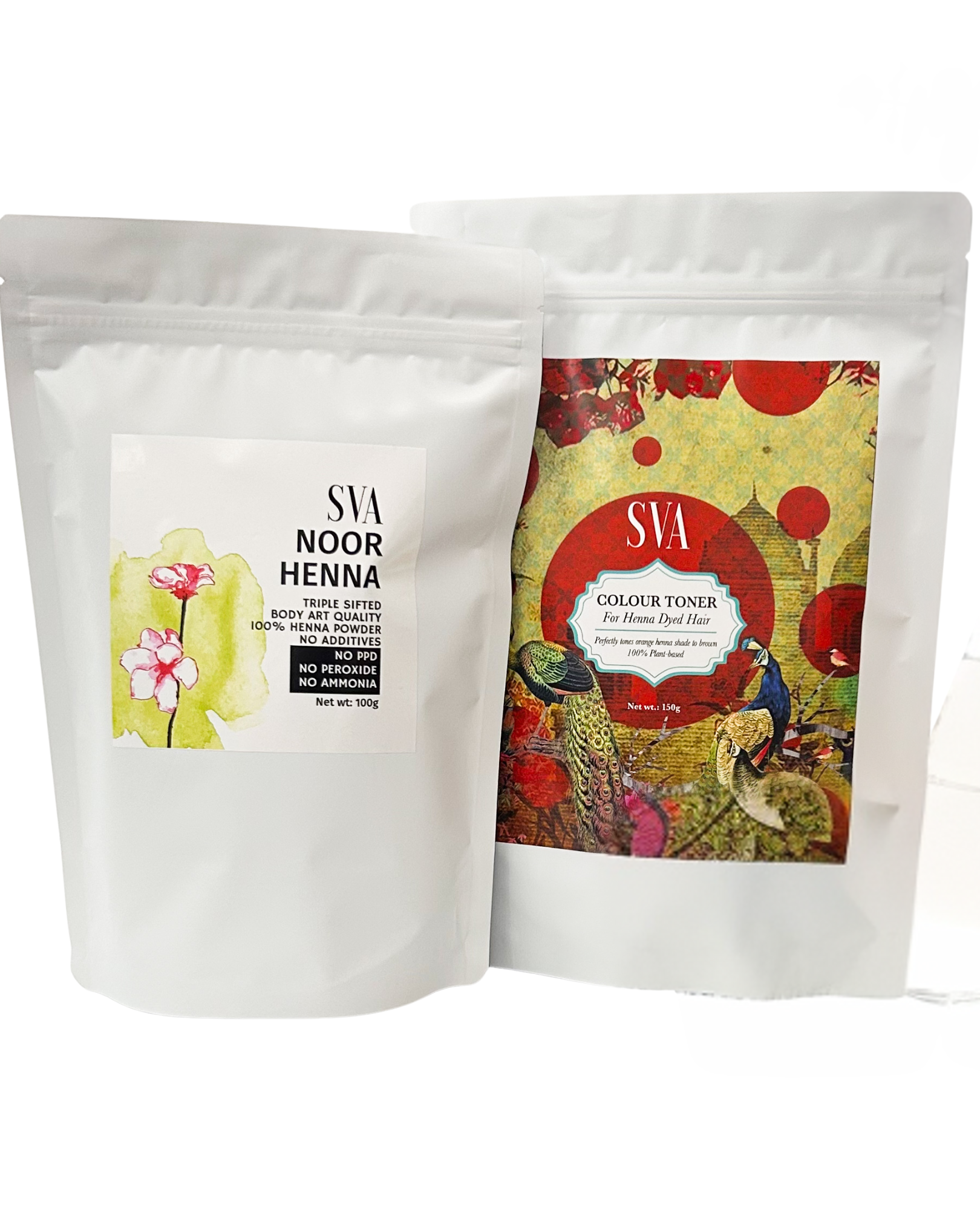
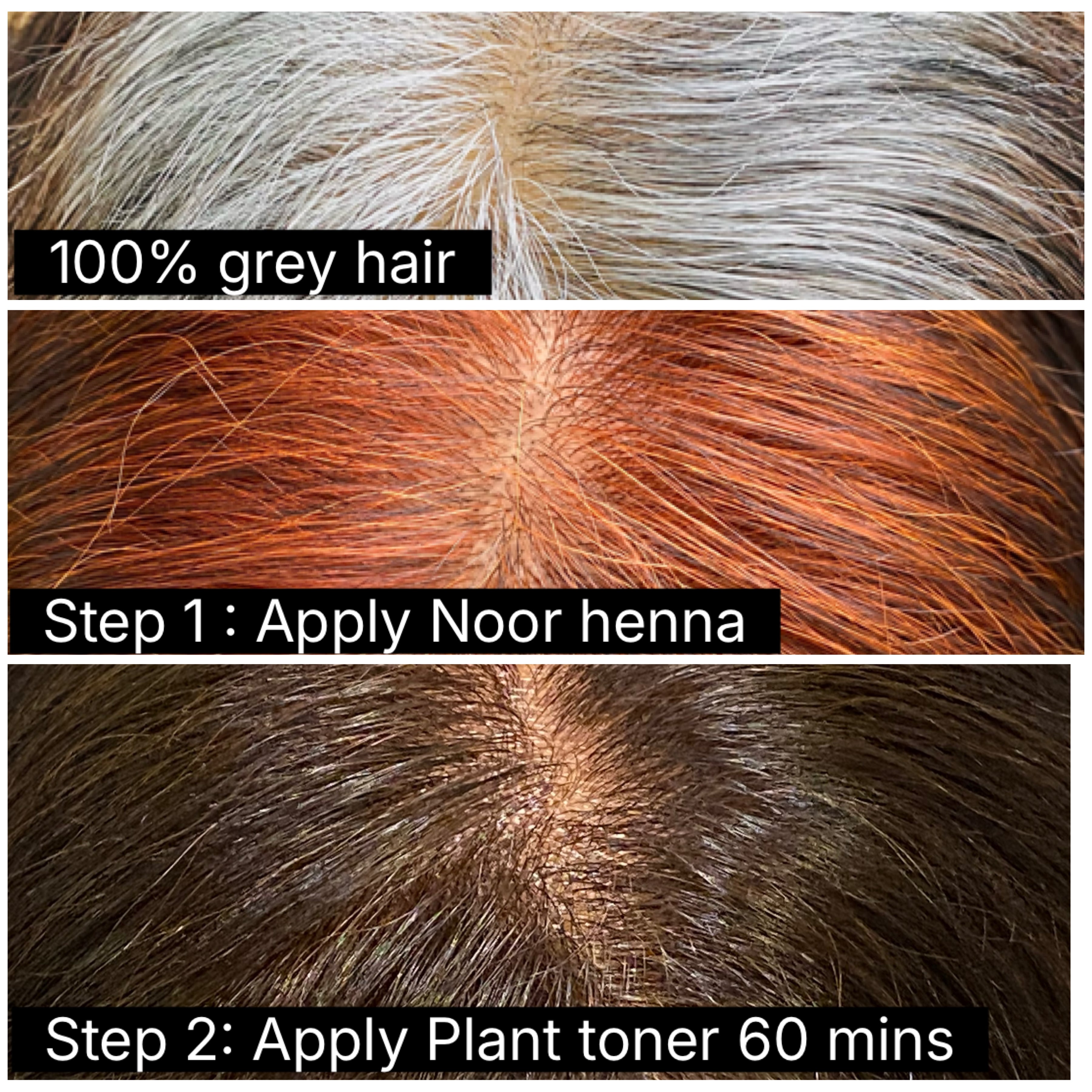
- SVA Noor Henna + Plant Toner — Our signature 3-in-1 treatment to colour, cover and condition hair. Ideal for medium to dark brown shades with 100% grey coverage. Great for dry, frizzy, dull, coarse, thinning hair and sensitive scalp. Visible results within 6 applications.
- SVA Raatrani — Two-step process for a deep, rich jet black result.

Not sure which shade is right for you? A simple rule of thumb: the more grey you have and the darker the shade you want, the more important the two-step process becomes for even, consistent results.
How to Use Plant-Based Hair Colour: 2-Step Process (Double Processing)
Here’s a simplified overview of how the SVA two-step process works:

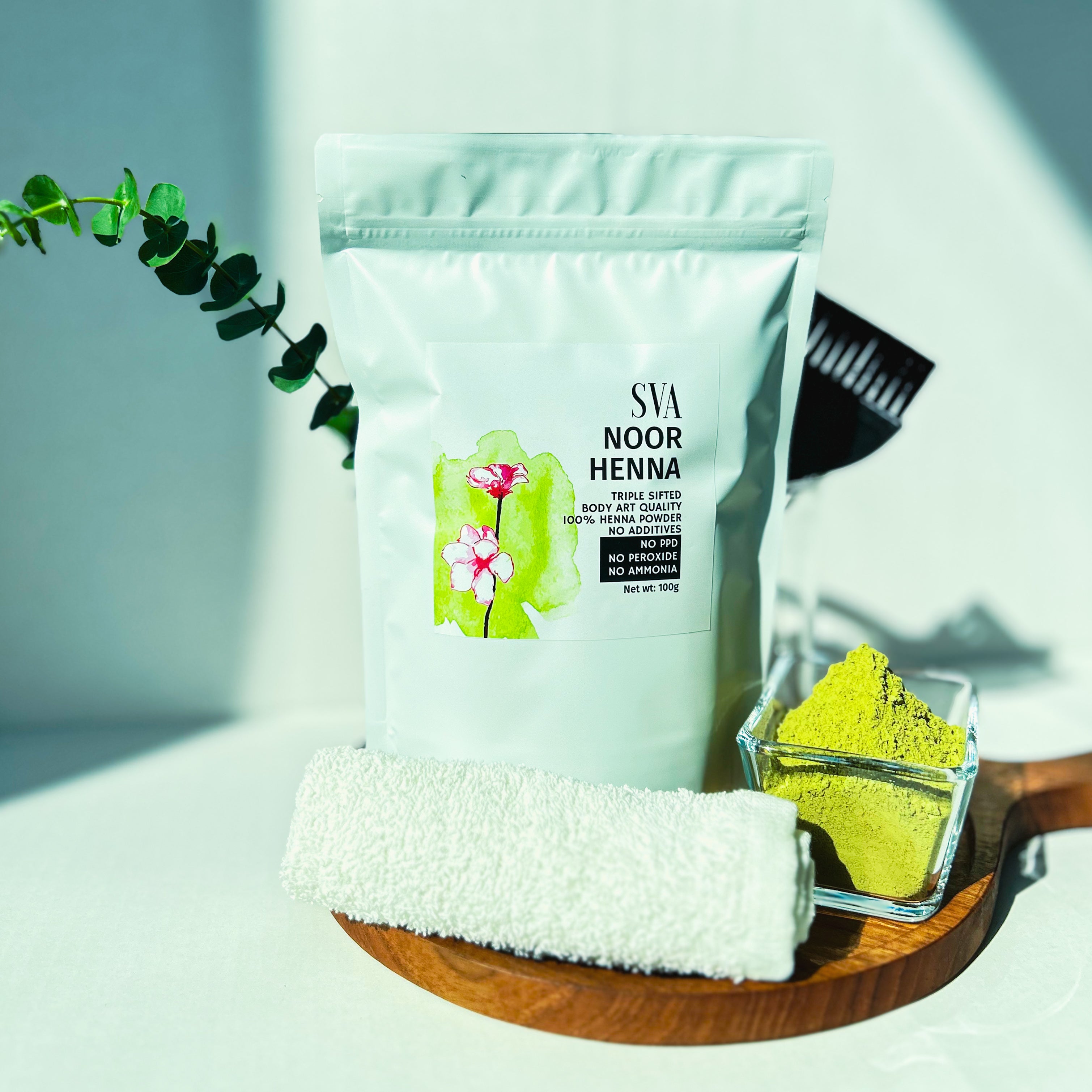
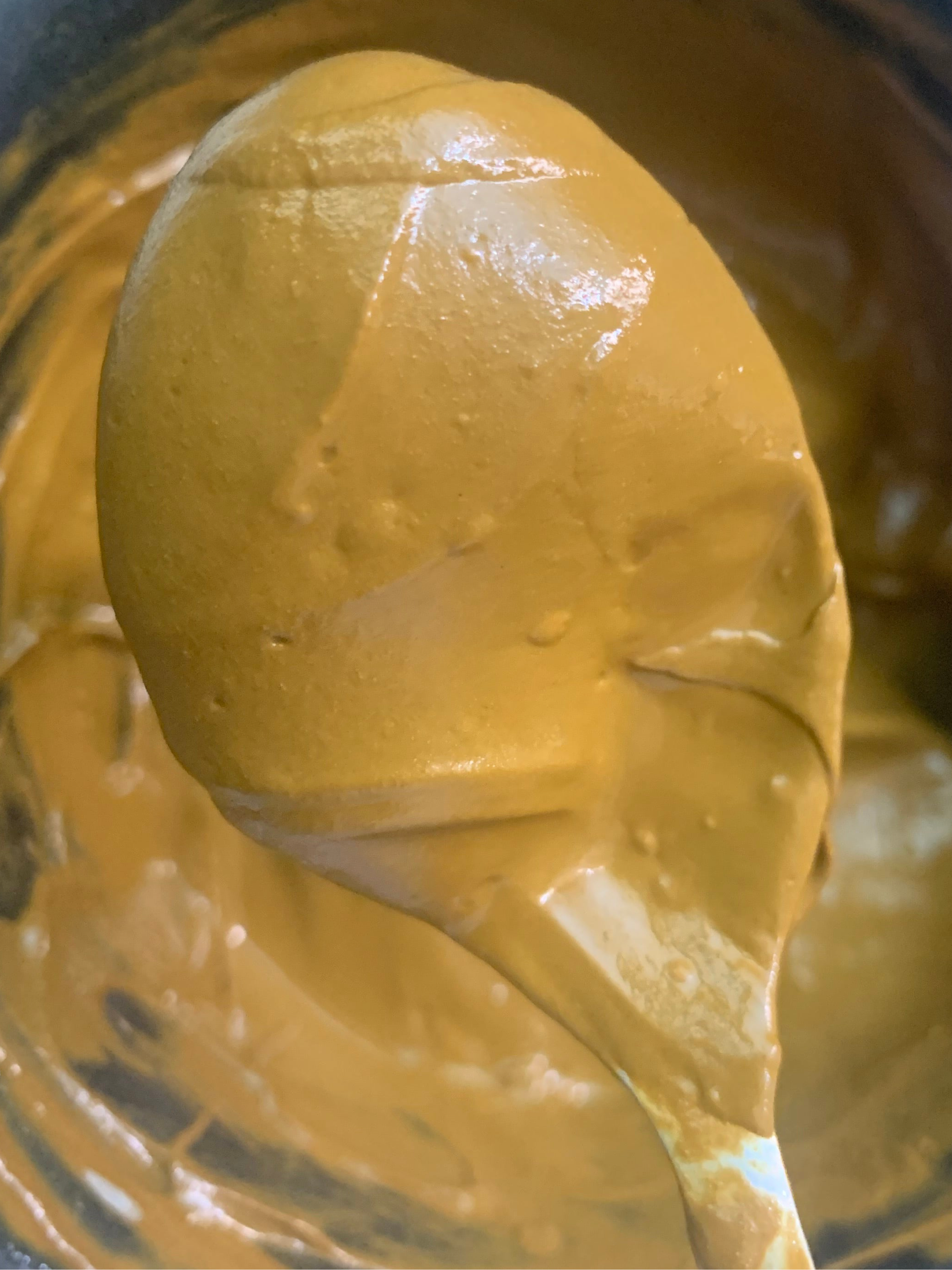
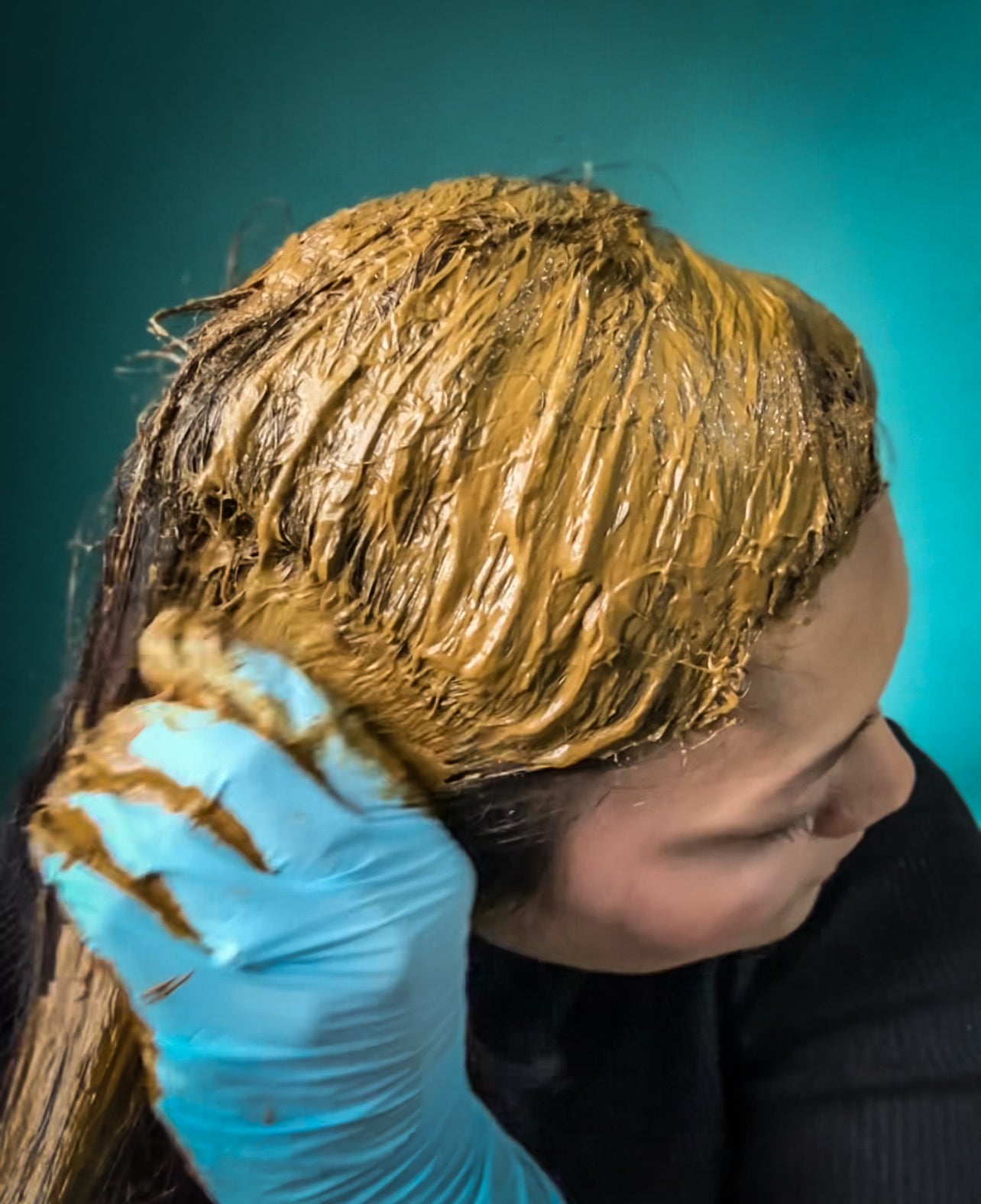
- Step 1 — Apply Henna: Mix SVA Noor Henna as per instructions and soak overnight. Apply on dry, shampooed hair from roots to tips. Process for 3–4 hours, then rinse thoroughly and shampoo as usual.
- Step 2 — Apply Plant Toner / Indigo: Soak, mix and blend SVA Plant Colour Toner / Indigo as per instructions. Apply to damp hair (after rinsing the henna) or dry hair if applying the next day. Leave on for 45–60 minutes, then rinse and shampoo as usual.
- Aftercare: Avoid hair oiling for 48–72 hours after the final shampoo to allow the colour to fully develop and oxidise. The colour deepens beautifully over the first 2–3 days.
How to Use Plant-Based Hair Colour: 1-Step Process (Single Processing)
Here’s a simplified overview of how the SVA 1-step process works:
- Step 1 — Soak Henna: Mix SVA Noor Henna as per instructions and soak overnight.
- Step 2 — Freshly Prepare Indigo: Once the henna has dye-released and is ready for application, mix Indigo as per instructions.
- Step 3 — Blend Henna Paste with Indigo: Blend the overnight-soaked henna with freshly prepared indigo powder to form a thick, even paste.
- Step 4 — Apply a Thick Coat on Greys: Cover and process for 3–4 hours. Rinse the paste out and shampoo as usual.
- Aftercare: Avoid hair oiling for 48–72 hours after the final shampoo to allow the colour to fully develop and oxidise. The colour deepens beautifully over the first 2–3 days.
What Results Can You Expect?
Plant-based colour is a journey — and a rewarding one. Here’s what most SVA users experience after monthly application:
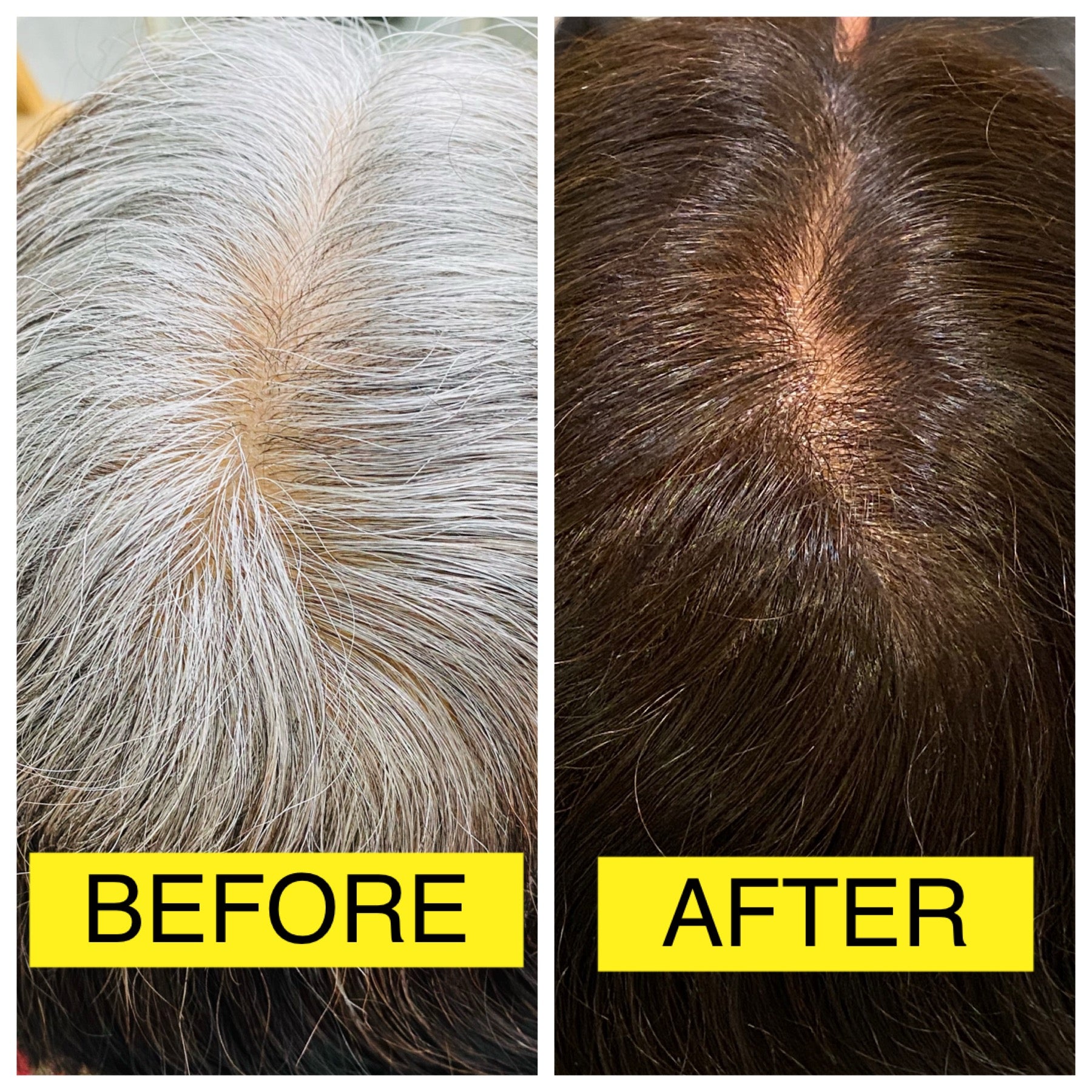
- First use: Good grey coverage, a natural-looking colour and soft hair.
- After 2–3 uses: Better grey coverage, deeper colour and improved hair shine.
- After 3–6 months: Visibly healthier hair — stronger, shinier and more nourished with every application.
- After 6–9 months: Visible hair transformation — repaired and restored to its original glory.
Unlike chemical dyes, the results get better the more consistently you use it. Your hair isn’t being stripped — it’s being built up.
Tips for Best Results
- Always do a patch test 48–72 hours before your first use.
- Avoid tap water or mineral water when soaking the powders. Always use distilled water (provided) or filtered water.
- Soak powders in airtight plastic or steel containers. Do not use iron pots to soak SVA Plant Dyes.
- Do not add food items like tea, coffee, yogurt, egg, lemon or beetroot to SVA Henna. The powders are naturally conditioning by themselves.
- Prep your hair in advance — apply on dry, shampooed hair for maximum colour uptake. Never on greasy or oily hair.
- Process the paste in hair for 3–4 hours or as recommended.
- Be consistent — monthly applications give the best long-term results.
- When starting out, don’t shampoo immediately after rinsing the paste (1-step process). After 3–4 months of consistent use, you can rinse and shampoo straight away.
- The colour will appear lighter immediately after rinsing and deepen over 2–3 days — this is completely normal.
- Use a heat cap while processing to improve dye uptake, oxidation and reduce processing time by half.
Ready to Start Your Plant-Based Hair Journey?
Switching to plant-based hair colour is one of the best decisions you can make for the long-term health of your hair and scalp. It takes a little patience but the results — vibrant colour, healthier hair and a scalp that finally feels at ease — are absolutely worth it.

Explore the SVA range and find your perfect shade. Your hair will thank you. 🌿
— Deepali Razdan
Connect with me: deepali@back2nature.com






0 comments